Jacques Gandini, Managing Director of Studio GANDINI S.R.L., the Italian independent consulting company specialized in residential, commercial, and industrial heat pumps
Heat Pump Technologies (HPT) are considered a valuable solution to provide, at the same time, low primary energy consumption and large usage of renewable energy in all sectors: residential, commercial, and industrial, including the use as a heat source of waste heat coming, for example, as an undesired consequence of Industrial Processes or Data Centers’ heat rejection into the atmosphere.
Waste heat in a waste-to-energy plant, instead of being discharged into the atmosphere, can be efficiently used as a heat source by large industrial heat pumps, implementing new generations of heat recovery systems, such as those obtainable through the now mature HTHP (High Temperature Heat Pumps) & VHTHP (Very High Temperature Heat Pumps).
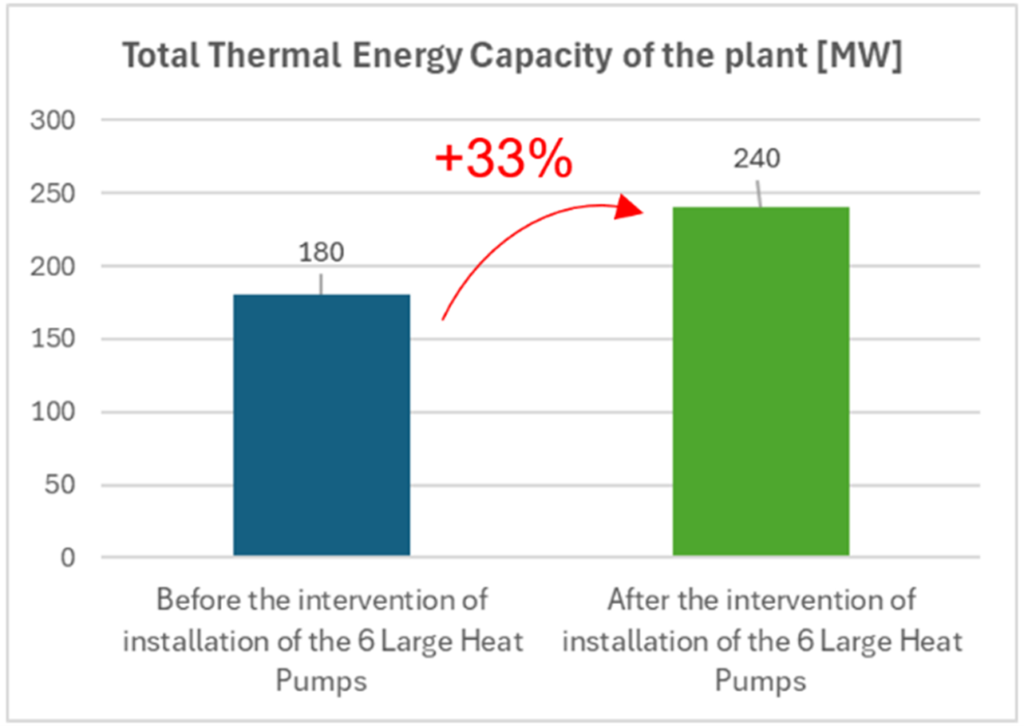
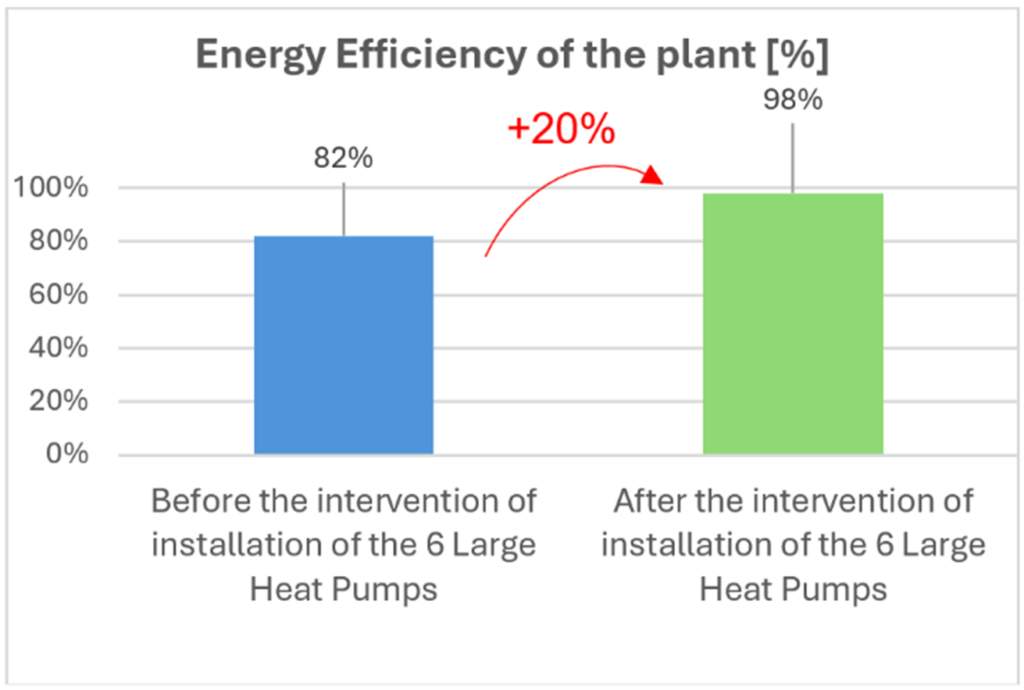
The specific application discussed in this paper is the Brescia (Italy) waste-to-energy plant, where, thanks to the thermal recovery achieved with high-temperature heat pumps, has been able to increase its thermal output capacity by +33% (a remarkable 60 megawatts more, in addition to the 180MW of the existing plant) and its overall energy efficiency increase by +20%, while maintaining the same combustion level of the existing waste-to-energy system. A perfect example demonstrating how thermal heat recovery using large high-efficiency heat pumps, in combination with industrial combustion plants, even large-scale ones, is already possible with existing technologies.
Introduction
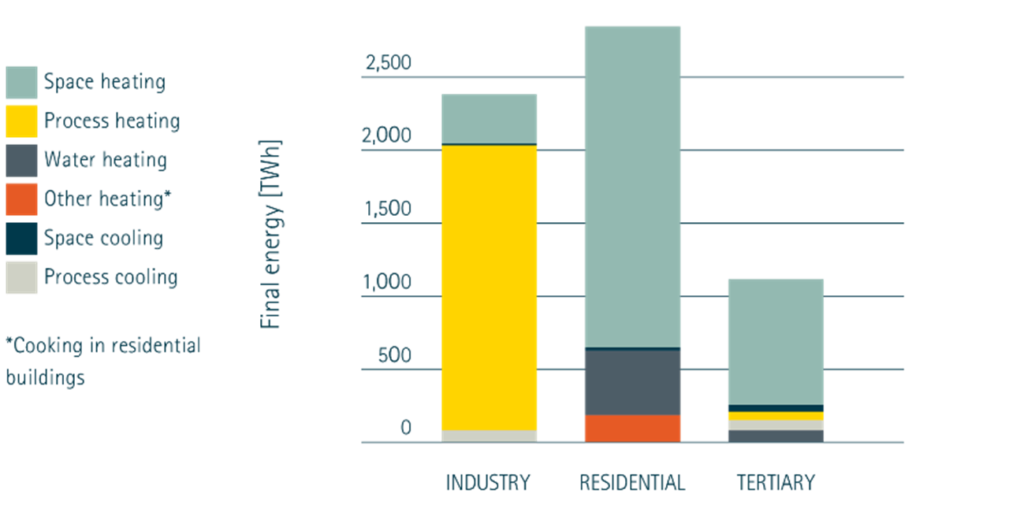
Between 2010 and 2025, following decades of focus on energy efficiency in residential and commercial buildings, the industrial sector has increasingly emerged as the next major frontier for energy recovery and decarbonisation in Europe. Process heating alone accounts for approximately 32% of total industrial energy use, around 2000 TWh, a scale comparable to residential space heating, yet progress in industrial efficiency has lagged significantly behind (See Figure 1).
A key reason is that industrial processes, with their primary focus on production output, have historically tolerated large quantities of thermal waste, heat that is generated as an unavoidable by-product and then simply discharged to the atmosphere. This is increasingly unacceptable given the ambitions of the EU Energy Performance of Buildings Directive (EPBD IV) [1] and Renewable Energy Directive (RED III) [2], and the broader drive to minimise primary energy consumption across all sectors.
Heat pump technologies offer a direct solution. By upgrading waste heat that would otherwise be lost, Large Commercial and Industrial Heat Pumps (LCIHP) can simultaneously reduce primary energy consumption and increase the share of renewable energy in industrial thermal supply. In the industrial context, three categories are relevant: conventional heat pumps (up to approximately 80°C), High Temperature Heat Pumps (HTHP, up to 100°C), and Very High Temperature Heat Pumps (VHTHP, exceeding 160°C). The Brescia waste-to-energy plant case study presented in this article demonstrates what is already achievable today using mature HTHP technology at scale.
Large heat pumps, waste-to-heat application
The Brescia (Italy) waste-to-energy (WtE) plant is one of the largest in Italy, producing 60% of the heat required by the city’s district heating network.
In 2024, a very innovative project aimed to optimize the flue gas treatment system, reducing nitrogen oxide (NOx) emissions and increasing the energy efficiency of heat production for the district heating network.
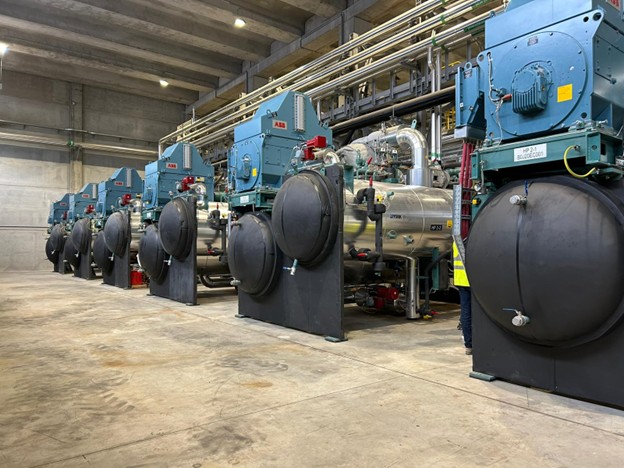
The project involved the installation of 9 JCI Johnson Controls heat pumps with centrifugal compressors to recover waste heat from the flue gases of the waste-to-energy plant and produce hot water up to 85°C for district heating.
The intervention included the expansion of the plant with a new flue gas treatment system to be integrated into the combustion line, aiming to reduce NOx and SOx emissions.
The low-temperature heat recovered from the exhaust gases (45/30°C) powers the JCI Johnson Controls heat pumps to produce 60 MW of thermal capacity of hot water (at a nominal temperature of 80°C) for district heating (maximum design water temperature 85°C, PN20).
The installation consisted of 3 trains, each with 3 units in series and counter-series for both the evaporator and the condenser. This setup increases efficiency by dividing the COP across the three units.
Additionally, this type of solution is highly flexible, allowing for maximum versatility in the system with high performance even under varying temperature and load conditions, allowing a nominal system COP of 5,2.
The units use low GWP (Global Warming Potential) refrigerant HFO-R1234ze, with a GWP of 7 and classified as A2L. A thorough risk analysis study was conducted in order to properly manage the mildly flammable refrigerant, in accordance with the EN 378 standard, implementing the correct precautions on-site.
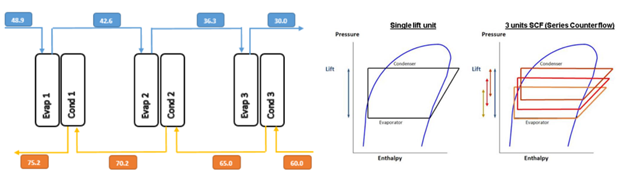
Figure 2: Scheme of interconnection of the 3 Heat Pump units in series and counter-series and relative Mollier diagrams with multiple compressors.
The result obtained, thanks to the energy efficiency intervention involving the installation of 9 Large Capacity Heat Pumps, permitted the plant’s generation capacity to increase from 180 MW (ensured by the cogeneration system) to 240 MW (+33%), as shown in Figure 4.
This +60 MW gain was achieved through the recovery of the latent heat from flue gas condensation in addition to the contribution of the 9 Large Capacity Heat Pumps.
This intervention represents a major advancement in energy efficiency, allowing for a significantly greater recovery of energy without increasing the combustion source. In essence, more useful energy is extracted from the same amount of primary energy input. As a result, the overall efficiency of the plant has improved from approximately 82% to about 98% (+20%) when operating in maximum heat recovery mode, as expressed in Figure 5.
This optimization is a best-in-class example of advanced energy recovery technologies and is fully aligned with A2A Group’s strategic focus on environmental sustainability and circular economy practices.
The Brescia (Italy) Waste-to-Energy plant, where this upgrade was implemented, is owned by A2A Ambiente, part of the A2A Group, an Italian leading Energy Utility Company. This initiative demonstrates A2A Ambiente continued commitment to innovation and leadership in sustainable waste management and energy production.
In addition, stack emissions have been reduced by an average of -40%, further emphasizing the environmental benefits of the intervention. This reduction is due to both the improved thermal efficiency and the lower flue gas temperature resulting from the condensation process, which contributes to reduced pollutant formation and enhanced control over emissions.
Author contact information
| Name | Jacques Gandini |
| Title | Managing Director |
| Affiliation | Studio GANDINI S.R.L. (Verona, Italy) |
| E-mail address | j.gandini@gandinistudio.com |
References
[1] Directive (EU) 2024/1275 of the European Parliament and of the Council of 24 April 2024 on the energy performance of buildings (recast) EPBD IV;
[2] Directive (EU) 2023/2413 of the European Parliament and of the Council of 18 October 2023 RED III, amending Directive (EU) 2018/2001, Regulation (EU) 2018/1999 and Directive 98/70/EC as regards the promotion of energy from renewable sources, and repealing Council Directive (EU) 2015/652;
[3] European Copper Institute “Integrating technologies to decarbonize heating and cooling”. https://www.ehpa.org/wp-content/uploads/2022/10/White_Paper_Heat_pumps-1.pdf;
[4] Publication IEA (International Energy Agency) – The Future of Heat Pumps ( https://www.iea.org/reports/the-future-of-heat-pumps );
[5] Publication “High temperature heat pumps: Market overview, state of the art, research status, refrigerants, and application potentials”, authors C. Arpagaus, F. Bless, M. Uhlmann, J. Schiffmann, and S. S. Bertsch.