Stephan Renz, Pierre-Guillaume Christe, Elena-Lavinia Niederhäuser, Switzerland
After a peak of 43,150 heat pumps sold in 2023, sales dropped to around 30,000 units in 2024 and 2025. Switzerland has established comprehensive legislation to achieve net-zero GHG emissions in energy supply by 2050, which enjoys substantial support by the public. However, to meet these goals, significantly more heat pumps must be installed than is currently the case. To achieve these goals, heat pump sales must nearly double. This applies in particular to older buildings constructed before 2000.
Introduction
Heat pumps play an important role in Switzerland’s energy system. Switzerland has no fossil fuel resources and starts in the 1920s to develop its hydropower capacity. Heat pumps were therefore an ideal solution for heat generation during times of energy crises. Substantial growth in the building sector began in the 1990s and reached a record high in 2023. The development of the mass market was supported by early quality assurance measures and government subsidies. Heat pumps are now installed almost exclusively in new buildings.
Switzerland in a nutshell
Population 9 million, GDP 900 billion EUR, Area 41’285 km2, highest point “Dufourspitze” (4634 meters ASL), lowest point Brissago (193 meters ASL); Heating degree days (HDD) between 1994 HDD (Lugano 275 m ASL) – 5054 HDD (Davos 1560 m ASL) – 9299 HDD (Jungfrau Joch 3469 m ASL).
Heat pumps installed: In 2024, a total of 469’815 heat pumps were installed, and 21% of the existing buildings were equipped with a heat pump. The target is 1.5 million heat pumps by 2050 [1].
Energy consumption in Switzerland
Final total energy consumption in Switzerland in 2024 amounted to 776,220 terajoules (TJ). The 5+-year comparison (2019 vs. 2024) shows a 7.2% decrease in Switzerland’s total energy consumption, corresponding to 61 TJ. The decline was mainly caused by reduced use of petroleum products (-12.8%) and natural gas (-17.2%). The climatic differences between 2019 and 2024 (calculated using the heating degree days [HDD]) indicate a 6.7% reduction in heating demand. In summary, the climate-adjusted consumption of fossil fuels has fallen by approximately 15%. Electricity consumption increased only slightly, by 1’100 TJ or 0.5%, during this period. For several years now, energy consumption in Switzerland has been decoupled from population and economic growth due to increasingly rational energy use.
Climate change in Switzerland
The temperature in Switzerland has risen sharply since measurements began. The current climate mean is already 3.0 °C above the pre-industrial average of 1871-1900 (as of 2026).

Drivers and Policies
The key basis of Swiss energy policy is the article on energy [2] enshrined in the Federal Constitution since 1990. The Energy Act, the CO2 Act, the Climate and Innovation Act, and the Electricity Supply Act all build on this article and together form the body of legislation on which Switzerland’s sustainable and modern energy policy is based.
In 2017, the Swiss public voted in favor of the revised Energy Act [3], [4]. This was the first step in implementing the 2050 Energy Strategy. The act bans the construction of new nuclear power plants, strengthens energy efficiency requirements, and significantly expands federal support for renewable energy, while maintaining strong cantonal responsibility for building energy use. The act strongly favors the electrification of heating and the replacement of fossil fuel systems.
At the end of 2020, the SFOE published its Energy Perspectives 2050+ [5]. This document further develops the 2050 Energy Strategy by identifying technological paths across a series of scenarios that outline the objectives of both energy policy (a secure, largely renewable energy supply by 2050) and climate policy (net zero emissions by 2050).
Laws are periodically adapted to address new boundary conditions or strengthened to reflect recent developments. New or revised acts are subject to an optional referendum and can be rejected by the public, as happened to the revised CO2 Act, which was rejected in June 2021. On March 15, 2024, an amended version of the revised CO2 Act was passed by parliament and brought into force [6].
Based on an initiative submitted in November 2019, the Federal Council adopted a Federal Act on Climate Protection Goals, Innovation and Strengthening Energy Security [7]. After the act passed the parliament in June 2022, opponents successfully filed a referendum against it. But in June 2023, the Swiss public voted (with 59.1%) in favor of this new Federal Act, which creates a framework for Swiss climate policy and sets interim targets for reducing greenhouse gas (GHG) emissions by 2050.
In June 2021, the Federal Council adopted the Federal Act on a Secure Electricity Supply from Renewable Energy Sources. The act is based on the conclusions of Energy Perspectives 2050+ and results from a revision of the Energy Act and Electricity Supply Act. The key aim is to strengthen Switzerland’s security of supply, particularly in the winter months, by expanding domestic renewable electricity production and setting binding expansion targets and energy consumption reduction targets. The bill was passed by parliament in September 2023. Because a referendum was successfully filed against it, a public vote was held in June 2024. The revision of the acts was accepted with 68.7% approval, and the act came into force in January 2025. [8]
In summary, it can be concluded that Swiss voters strongly support the federal government’s energy and climate policy. Despite this robust legal framework and the deployment of multiple incentive schemes and support mechanisms, the effective pace of transformation of the Swiss energy system remains a key challenge.
Energy-legislation at cantonal level
The cantons are responsible for building legislation. To harmonize energy legislation across Switzerland’s 26 cantons, their energy ministers drafted a model bill in 2014 [9]. In this law, heat pumps are a preferred solution for heat generation. The cantonal parliaments may amend the model bill, and citizens have the right to call for a referendum. By 2025, all but one canton have implemented the law with their own amendments. In the meantime, the energy ministers have passed the 2025 bill, and the cantons are beginning to implement it.
Incentives
Each canton sets its own subsidy amounts for energy efficiency measures in the building sector. The amount of the subsidies varies widely. Some cantons provide a subsidy of CHF 2,000 for heat pumps, while others offer CHF 10,500 for 10 kW air-to-water heat pumps and CHF 30,000 for ground-source heat pumps. With the Climate and Innovation Act, additional incentives have been introduced for renewable heating systems with a minimum power of 70 kW. It also contains measures for the integration of district heating networks and seasonal thermal energy storage [10].
Market overview – until 2017
The heat pump market in Switzerland dates back to 1878, when the world’s first commercially used vapor recompression plant was installed at the saltworks at Bex. In the years that followed, heat pumps were primarily developed and used in industry and for refrigeration applications. A first peak occurred during World War II, when numerous large-scale systems were installed for building heating. Until the 1970s, fossil fuels were the primary energy source. The oil crises of 1973 and 1978 triggered the construction of several large-scale heat pump systems integrated with district heating networks.
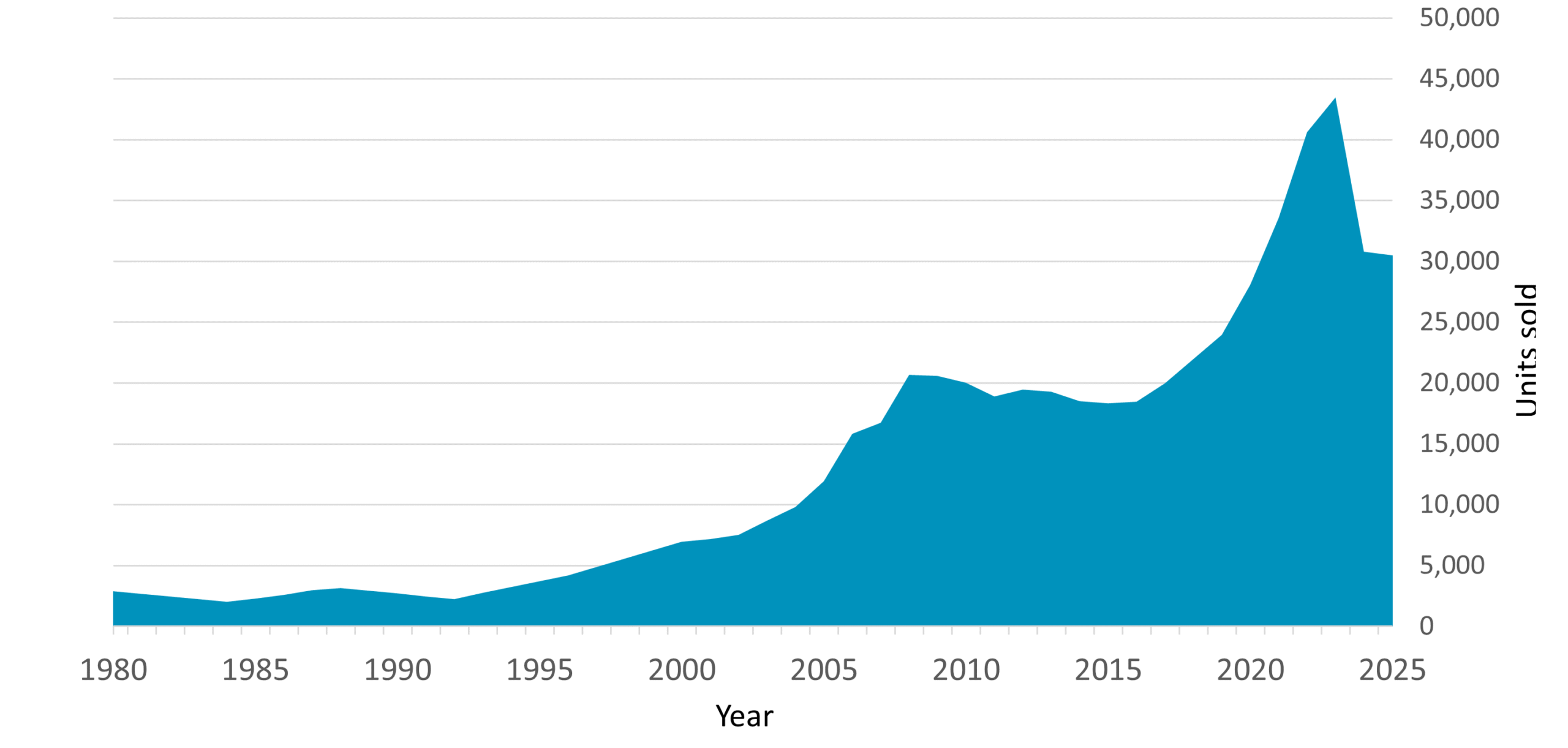
Sales of smaller heat pumps for central water heating systems in single-family homes and larger residential buildings started only in 1980s (Figure 2). Until mid-1990s, around 2000 – 3000 heat pumps were sold each year. Establishing the Swiss Association for the Promotion of Heat Pumps (FWS) in 1993 accelerated the sales. Its tasks include the provision of information and advice, education and training, advocacy and quality assurance [12]. Sales rose rapidly in the mid-1990s and reached a first peak in 2007 with 20,670 units. Until 2017, sales figures remained flat at just under 20,000 units per year.
Development 2017 – 2025
From 2017 onward, the number rose steadily until 2023, when a preliminary peak of 43,490 heat pumps was reached. The decline in heat pump sales observed in 2024 applies to units with a capacity of up to 20 kW. Higher electricity prices starting in 2023 and the very high demand for heat pumps from 2021 to 2023 have led to negative effects in the heat pump market (e.g. price surcharges, delivery problems, and a smaller price difference between heating systems in terms of annual energy costs). Issues such as the mandatory use of natural refrigerants, noise protection regulations, historic preservation requirements, and permitting procedures are having an additional negative impact on heat pump sales.
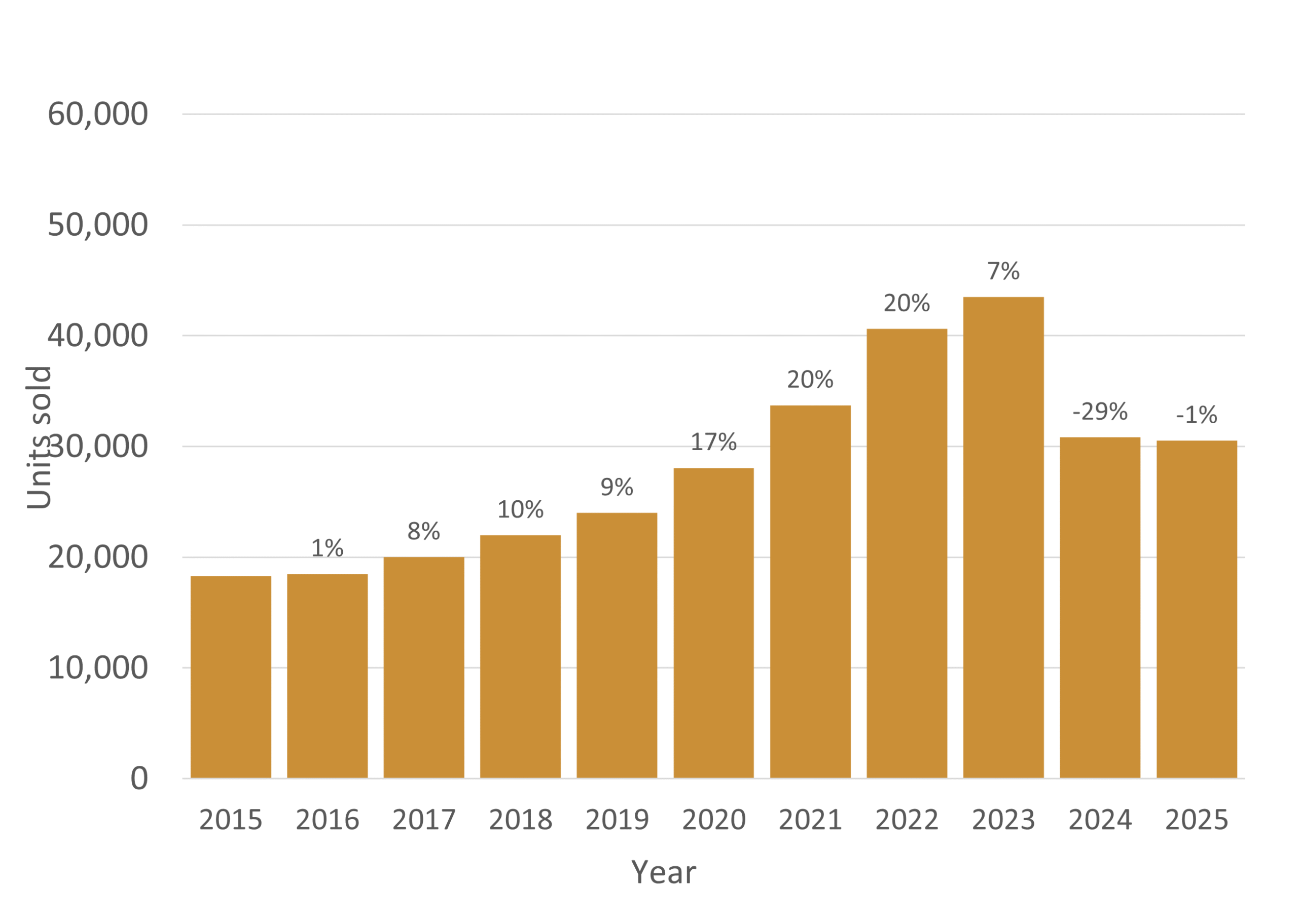
The statistics are based on self-reported data from manufacturers/suppliers. They do not include hot water heat pumps (7903 units sold in 2023), large heat pumps, e.g. in district heating applications or custom-made products for the industry.
Power of the heat pump sold
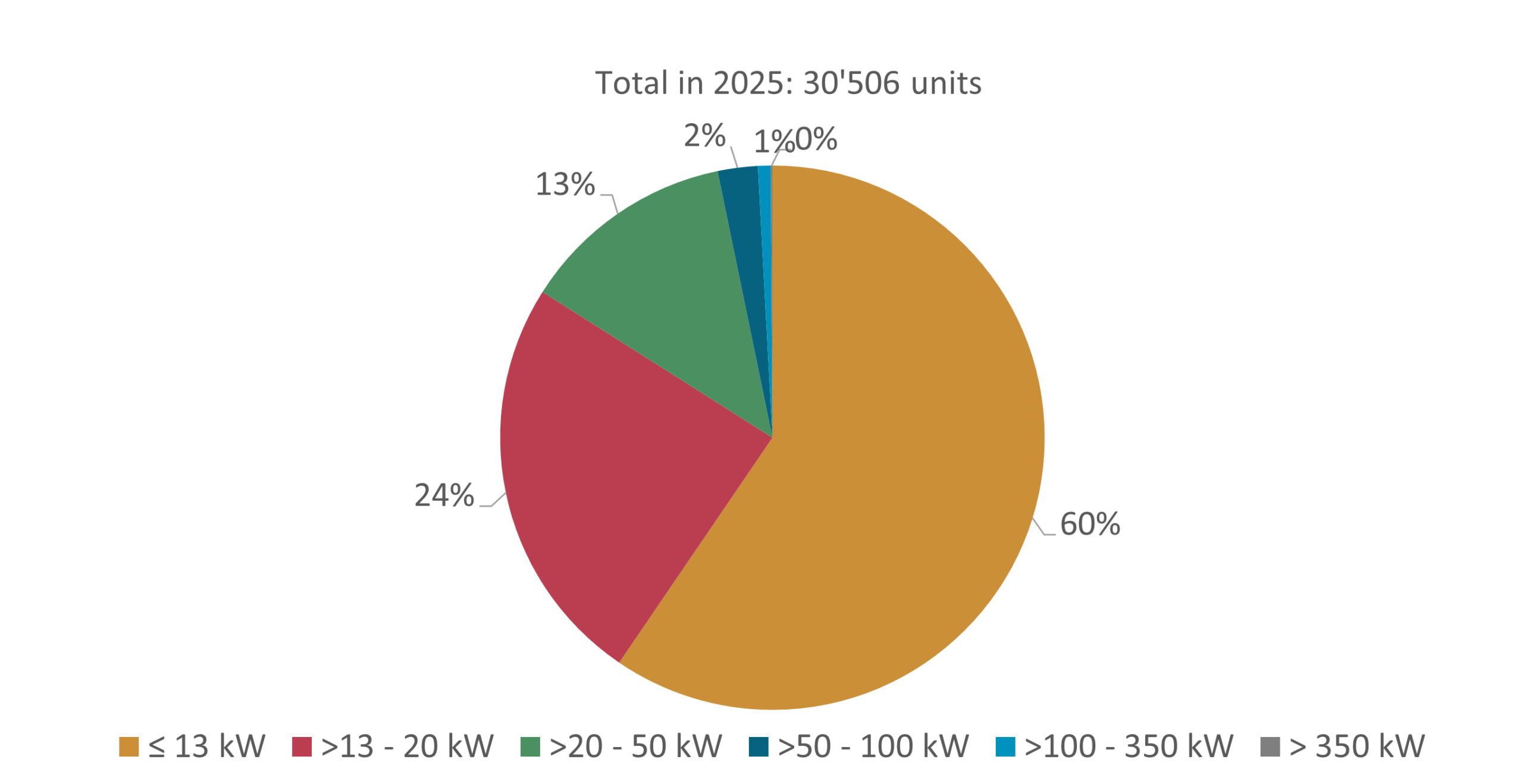
Further analysis of sales figures shows that 85% of the units sold have an output of less than 20 kW and 97% are below 50 kW (Figure 4).
In recent years, however, there has been a growing trend toward installing or planning large-scale heat pump systems to supply district heating networks or new neighborhoods. Some of these projects involve low-temperature networks (Zurich) or are implemented as Positive Energy Districts (Cham). This goes hand in hand with the ambitious goals of major Swiss cities to become “climate-neutral” (Basel: 2037, Zurich:2040, Bern 2045).
Air-to-water heat pumps are the most popular (72%), followed by ground source heat pumps (27%). Air-to-air heat pumps are rarely installed in Switzerland (Figure 5).
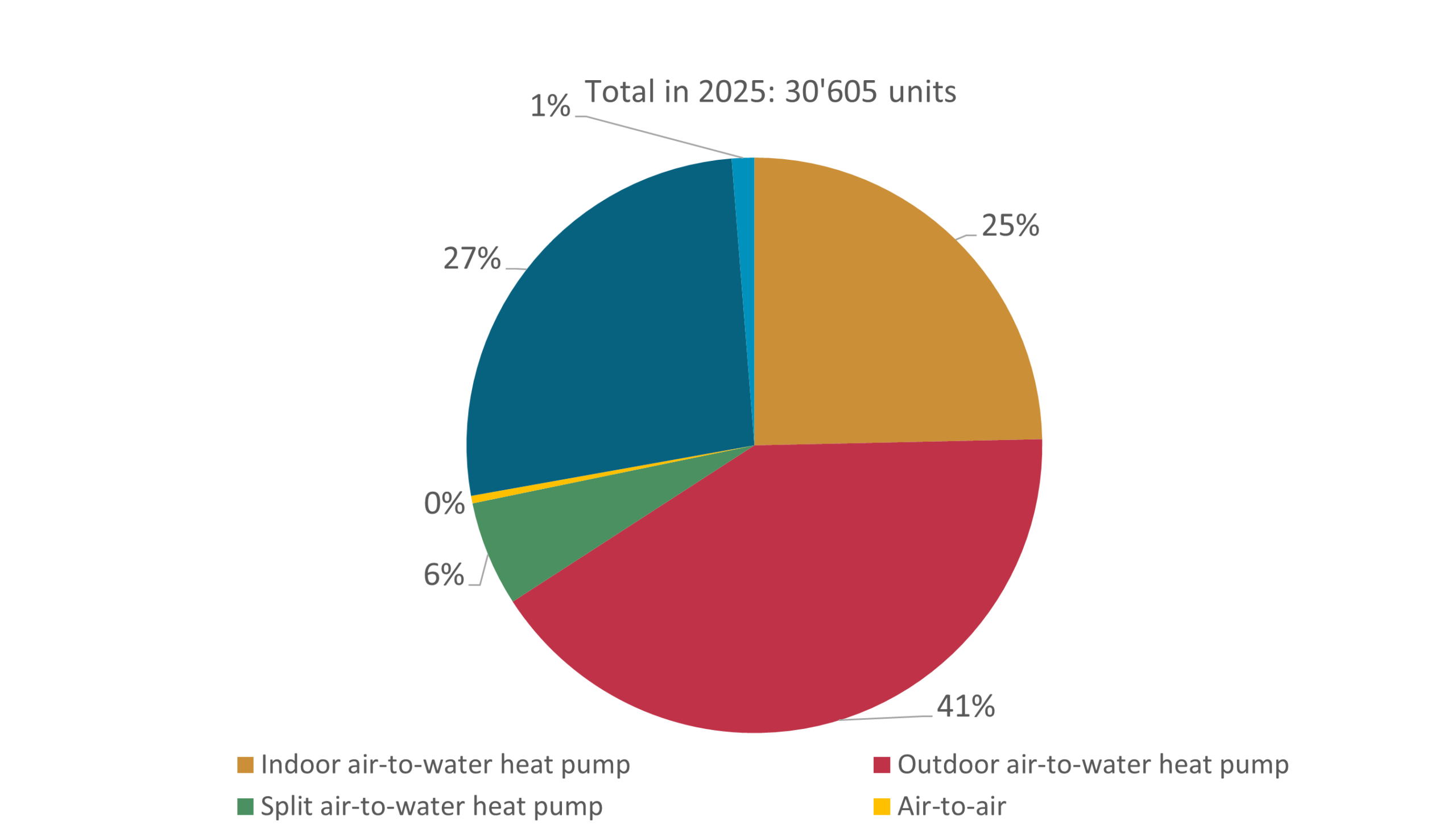
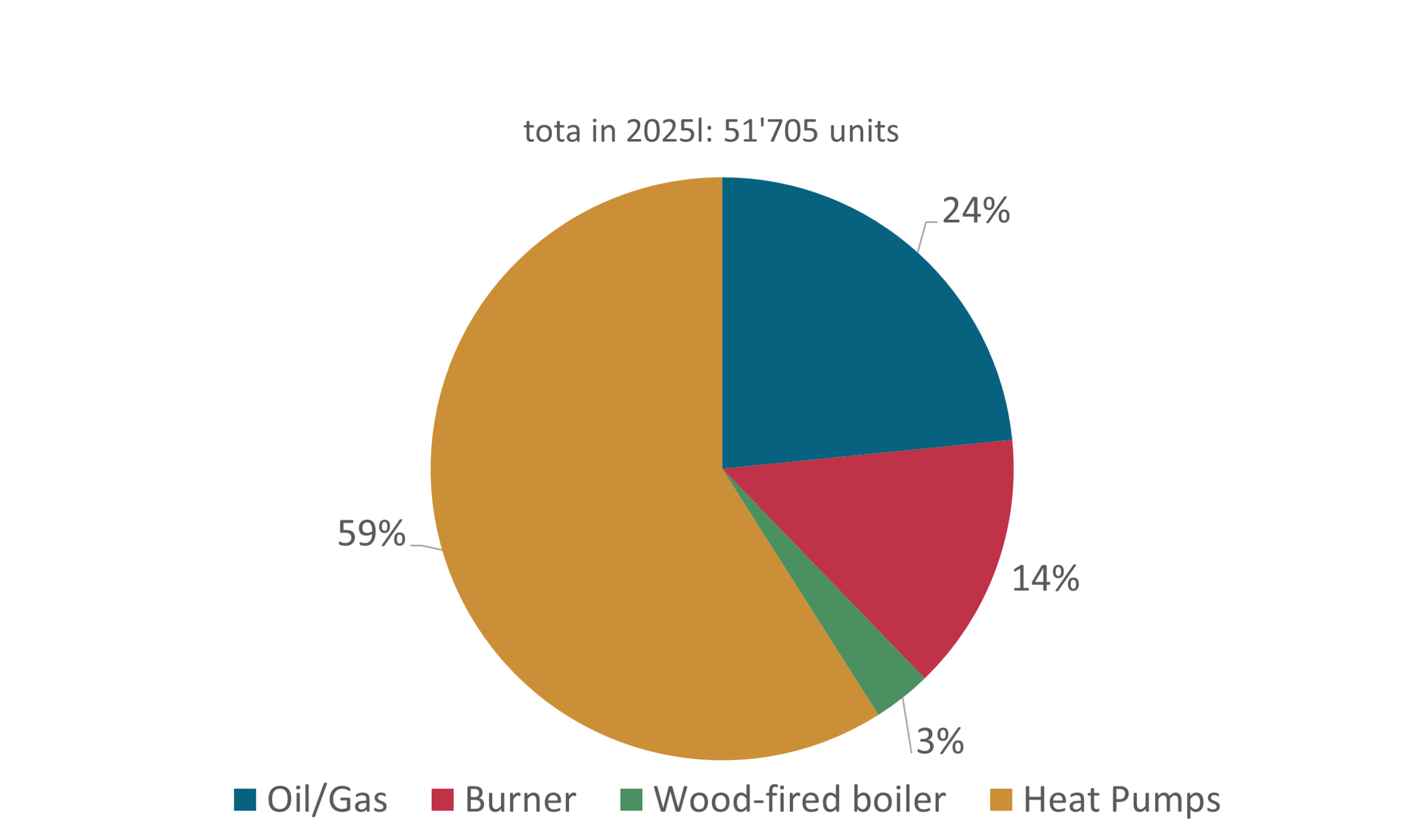
Heat pumps account for a very high proportion in the number of heating systems sold annually in Switzerland. In 2025, the figure was 59% (Figure 6).
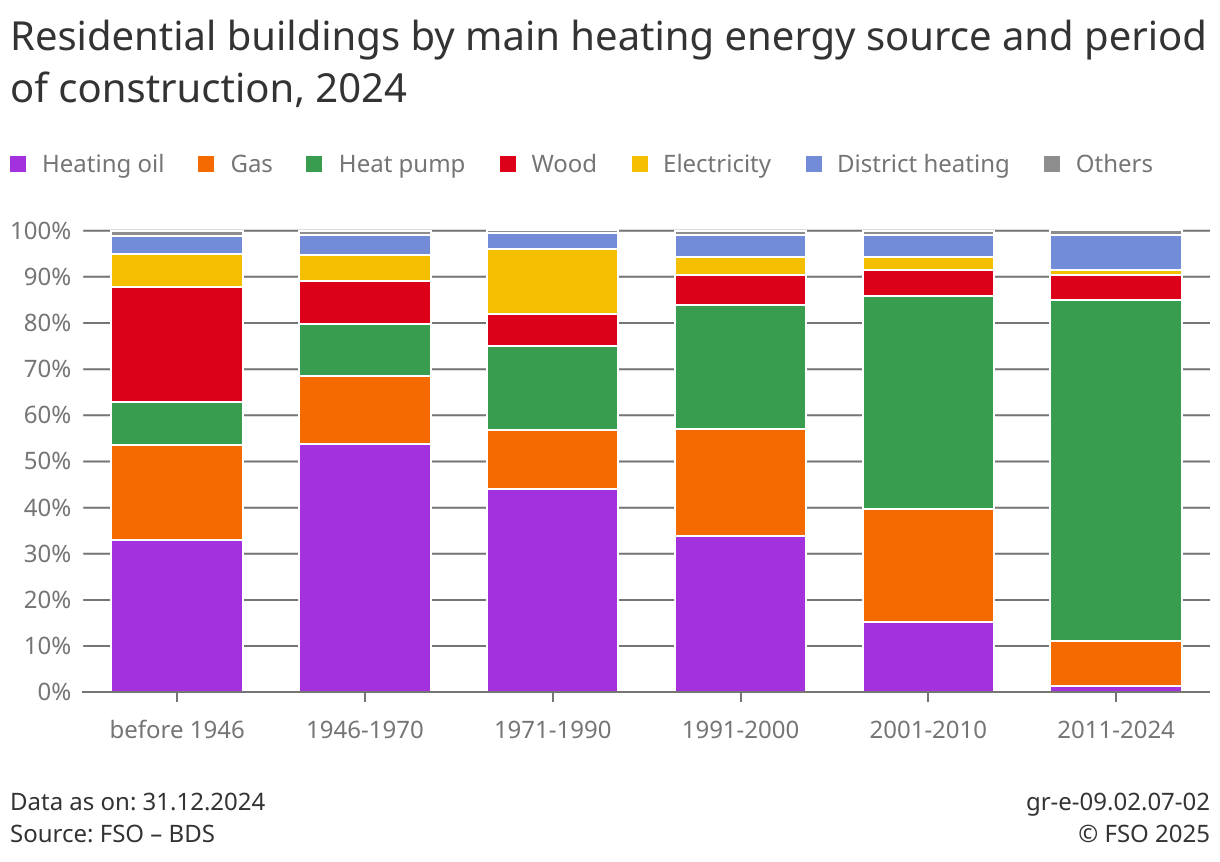
In buildings constructed after 2011, oil-fired heating systems are rarely installed, and gas-fired systems are becoming increasingly rare. The heating systems are sustainable, with heat pumps accounting for the majority. The older the buildings are, the fewer heat pumps are installed (Figure 7).
Conclusions
Fossil fuels have long influenced the development of the Swiss heat pump market, albeit through different mechanisms over time: historically through supply bottlenecks (physical constraints and price volatility), and today through the need to decarbonize the energy system. While energy and environmental policies, supported by incentive schemes, clearly favor the deployment of heat pumps, current sales volumes remain insufficient to meet long-term climate and energy objectives – particularly in the existing building stock, where technical and economic barriers are greatest. Moreover, market statistics only partially capture recent dynamics, as large heat pumps for district heating and industrial applications are typically excluded. In these segments, growth is increasingly reflected in installed capacity rather than unit numbers.
Author contact information
| Name | Stephan Renz |
| Title | Alternate ExCo delegate Switzerland and Chairman of HPT TCP ExCo |
| Affiliation | Beratung Renz Consulting |
| Postal address | Elisabethenstrasse 44, 4010 Basel, Switzerland |
| E-mail address | info@renzconsulting.ch |
| Phone number | +41 61 271 7636 |
References
[1] Federal Office of Meteorology and Climatology MeteoSwiss
https://www.meteoswiss.admin.ch/climate/climate-change.html
[2] Federal Department of the Environment, Transport, Energy and Communications
DETEC, 2025, Principles of Energy Policy. https://www.uvek.admin.ch/en/energy-policy
[3] The Federal Council, 2017, SR 730.0 Energiegesetz (EnG). In German, French, Italian. https://www.fedlex.admin.ch/eli/cc/1999/27/de
[4] The Federal Council, 2026, 730.0 Energiegesetz (EnG). In German, French, Italian. https://www.admin.ch/opc/de/classified-compilation/20121295/index.html
[5] Swiss Federal Office of Energy (SFOE), 2023, Energy perspectives 2050+. https://www.bfe.admin.ch/bfe/en/home/policy/energy-perspectives-2050-plus.html/
[6] The Federal Council, 2025, 641.71 Federal Act on the Reduction of CO2 Emissions. In English, German, French, Italian. https://www.fedlex.admin.ch/eli/cc/2012/855/en
[7] The Federal Council, 2022, Bundesgesetz über die Ziele im Klimaschutz, die Innovation und die Stärkung der Energiesicherheit. In German, French, Italian. https://www.fedlex.admin.ch/eli/fga/2022/2403/de
[8] SFOE, (Swiss Federal Office of Energy), 2021, Federal Act on a Secure Electricity Supply from Renewable Energy Sources. https://www.bfe.admin.ch/bfe/en/home/supply/electricity-supply/federal-act-renewable-electricity-supply.html/
[9] Konferenz Kantonaler Energiedirektoren (EnDK), 2014, MuKEn Mustervorschriften der Kantone im Energiebereich. In German, French, Italian. https://www.endk.ch/de/energiepolitik-der-kantone/muken
[10] Das Gebäudeprogramm. https://www.dasgebaeudeprogramm.ch/de/
[11] FWS, Fachvereinigung Wärmepumpen Schweiz, 2025, Wärmepumpen Marktentwicklung Schweiz.
[12] FWS, Fachvereinigung Wärmepumpen Schweiz. Die FWS. https://www.fws.ch/category/die-fws/
[13] Federal Statistical Office, Residential buildings by main heating energy source and period of construction https://www.bfs.admin.ch/bfs/en/home.assetdetail.36155298.html