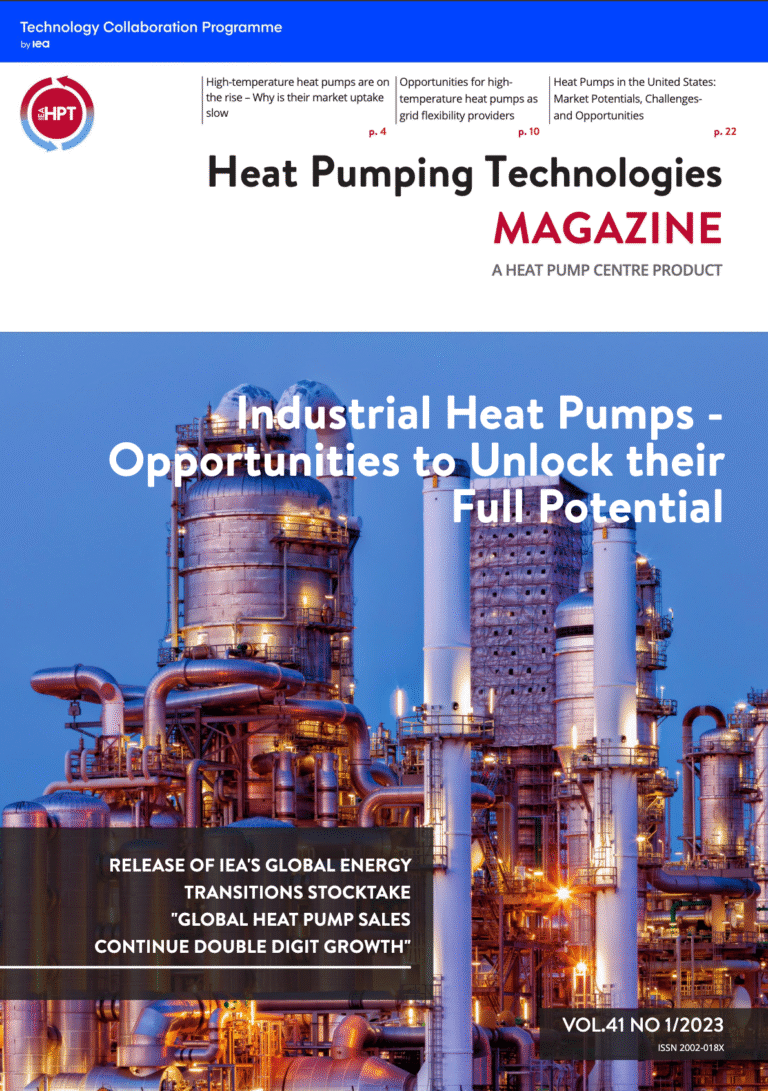
Most of the total energy demand of industries is used for process heating and is typically based on fossil fuels. Decarbonization of industrial process heating is accordingly one of the focus areas for reducing greenhouse gas emissions, where energy efficiency and electrification are the most effective measures. Industrial heat pumps are combining energy efficiency and electrification and are, accordingly, one of the most promising technologies for decarbonizing industrial process heating.
Already today, they are the optimal solution for a variety of applications, while fuel prices and carbon taxes are becoming more favorable for heat pumps, extending the range of applications even more. The IEA underlines the tremendous potential of industrial heat pumps, estimating that around 500 MW of heat pumps have to be installed per month over the next 30 years in light industries to keep on track towards net zero emissions by 2050.
Most of the systems applied in the industry operate at supply temperatures below 100 °C, where various technologies are readily available, and good performances can be achieved. For higher temperatures, where most of the current process heating is required, only a few technologies are currently available. It may, however, be noted that a considerable number of developments are ongoing, aiming to develop and demonstrate heat pump-based process heating. Considering the huge potential in contrast to the technology status, it may be questioned how the full potential of industrial heat pumps can be fully exploited?
In my opinion, it requires a comprehensive and interdisciplinary effort involving various stakeholders to unlock the full potential for industrial heat pumps, including:
- The development of advanced heat pump technologies for both retrofit of existing process equipment and integration of industrial heat pumps into new process equipment with a focus on bringing solutions up to 160 °C into application and advancing the state of the art for even higher temperatures.
- A dedicated and immediate effort from process industries to initiate the transition towards heat pump-based process heating typically starts with strategy development, process modifications, and, finally, the testing and integration of industrial heat pumps. Clear and long-term political frameworks supporting the implementation of energy efficiency measures and electricity-based process heating solutions.
- Partnerships are key to realize these developments at the needed speed – heat pump technology suppliers, end-users, process equipment suppliers, consultants, R&D organizations, policy makers, and more are required to team up and make a common effort for the green transition.
In order to support these urgently needed developments and to create a solid knowledge base to inform the various stakeholders, we have facilitated HPT Annex 58 about high-temperature heat pumps. In this Annex, we are providing a technology overview, integration concepts, and guidelines for the transition process. Stay tuned for the various results of the Annex to be published during 2023! Furthermore, you will find various good examples of relevant developments within this issue. I hope you will enjoy reading it and get inspired by the great examples being presented!

Benjamin Zühlsdorf