

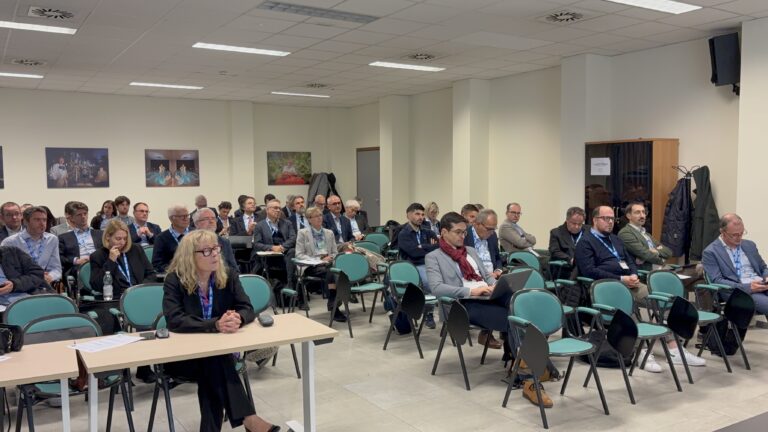
Heat pumps are becoming essential to the electrification of buildings, industry and energy systems. But how can their considerable technical potential be translated into widespread, reliable and competitive solutions? At a full-day event in Pisa, national and international representatives from research, industry, policy and training explored what is needed to accelerate this transition. Their discussions pointed to a clear conclusion: technology is advancing rapidly, but successful deployment depends just as much on skills, collaboration and a system-wide perspective.
Bringing together research, policy and industry
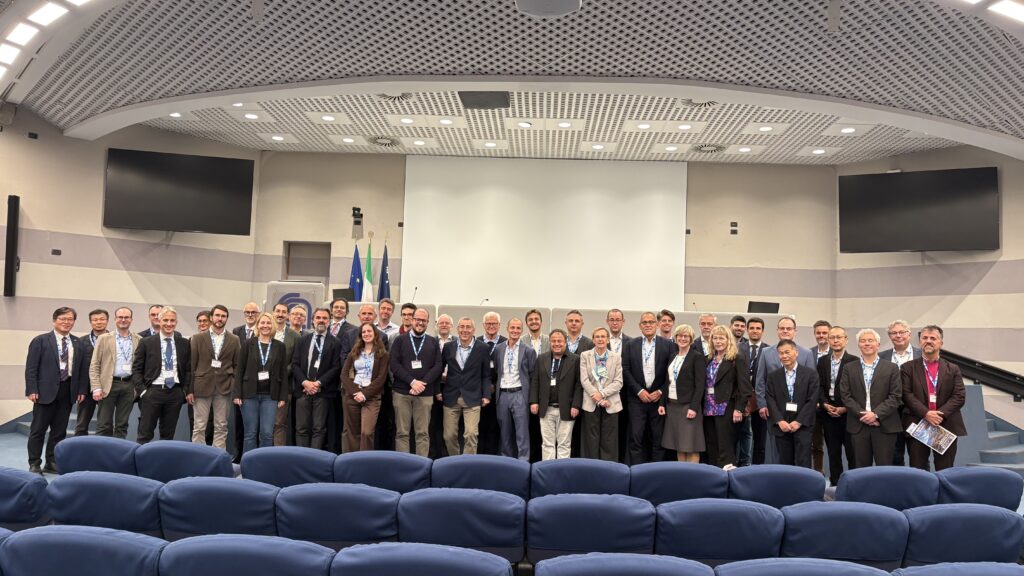
Around 50 participants gathered on November 17, 2026, at the Italian National Research Council’s (CNL) facilities in Pisa for a national workshop hosted by ENEA (Italian National Agency for New Technologies, Energy and Sustainable Economic Development) in conjunction with a meeting of the IEA Technology Collaboration Programme on Heat Pumping Technologies, HPT TCP. The event brought together HPT TCP delegates and representatives from the Italian heat pump sector, including researchers, manufacturers, training organisations, installation and service providers.
The opening presentations positioned heat pumps as a key driver of the energy transition through electrification. However, the transition is also an industrial undertaking. Countries must not only adopt clean technologies but develop the expertise, production capacity and competitive industries needed to provide them. Stronger cooperation between research and industry will therefore be essential for turning innovation into scalable solutions.
New opportunities in buildings and industry
Presentations from HPT TCP projects demonstrated the breadth of ongoing development. Work on flammable refrigerants is producing knowledge and recommendations that can support their wider and safer use. Research on leak scenarios, ventilation and refrigerant concentration is particularly important as the sector moves towards natural refrigerants such as propane.
Industrial high-temperature heat pumps were another major theme. These technologies can support the decarbonisation of industrial processes, but they rarely provide a simple one-to-one replacement for conventional equipment. Their introduction often requires system redesign, long-term electrification strategies and cooperation between end users, heat-pump manufacturers, component suppliers, process-equipment providers and consultants. Independent knowledge is crucial to help companies assess opportunities and manage the associated technical and commercial risks.
Italian universities and research organisations also presented advances in multisource heat pumps, thermal storage, natural and low-GWP refrigerants, fault detection, advanced control and heat recovery. The research illustrates how heat pumps are becoming increasingly integrated with solar energy, storage, building energy management and industrial processes.
Skills may become the decisive bottleneck
Technology alone will not determine the pace of deployment. A recurring message was that shortages of trained designers, installers and service technicians risk becoming one of the sector’s largest bottlenecks.
The transition to low-GWP and flammable refrigerants creates new requirements for equipment, procedures and professional certification. Competence must cover the entire system, from correct sizing and hydronic design to controls, acoustics, maintenance and safe refrigerant handling. Training must also address different levels of experience, providing both basic knowledge for students and specialised learning for established professionals.
The newly established Italian Heat Pump Competence Center aims to strengthen cooperation among leading national actors and create a permanent working group for technical knowledge dissemination. Organisations such as AiCARR are contributing their networks and training expertise, while manufacturers increasingly support installers through standard configurations, design guidance, webinars and practical documentation.
Digitalisation is reshaping products and services
Digital tools are becoming integral to heat-pump development and operation. Simulation models can help users compare system configurations and estimate grid electricity demand and annual performance. Manufacturers are also using virtual development environments, real-time controls and machine learning to identify problems such as fouling and incorrect refrigerant charge.
These capabilities could enable new business models, including heat or cooling as a service, energy-performance contracts, predictive maintenance and comprehensive service agreements. At the same time, digitalisation introduces new requirements concerning data access, artificial intelligence and cybersecurity.
An entire value chain in transformation
The workshop showed an industry shifting from selling individual components towards providing integrated solutions. Manufacturers are investing in laboratories, university partnerships, simulation tools, compact equipment and locally adapted production. Yet important barriers remain, including electricity-to-gas price ratios, grid capacity, legacy systems and processes, fragmented regulation and limited recognition of thermal energy as a source of flexibility.
Safety must likewise be considered across the complete refrigerant lifecycle, from manufacturing and transport to installation, servicing and disposal. It is a shared responsibility involving manufacturers, installers, training organisations, legislators and standards bodies.
The direction of travel is clear. Heat pumps can make a major contribution to decarbonising buildings and industry and reduce the dependence on imported fossil fuels and thereby contributing to energy security and sovereignty. However, widespread implementation will depend on more than high-performing machines. It will require coordinated policy, skilled professionals, trusted knowledge and sustained collaboration across the value chain.
The agenda of the workshop, including links to the presentations can be found below:
The presenters are responsible for the content and images in their presentations.