

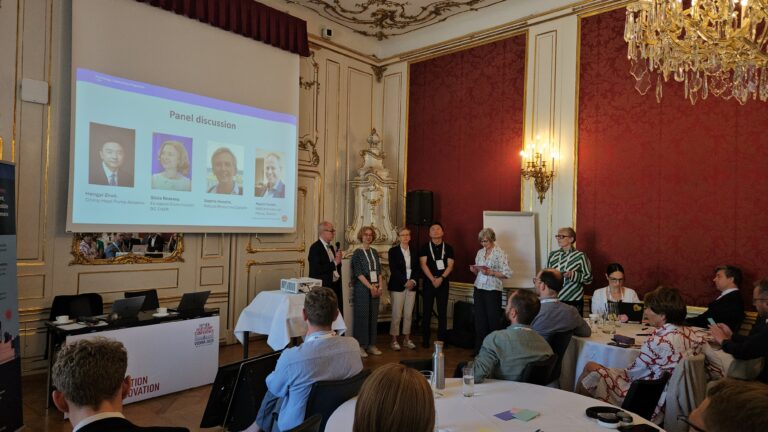
How can the heat pump community overcome policy, market and user-related barriers to speed up deployment? This question was at the centre of the workshop “Breaking Barriers – Accelerating Heat Pump Deployment”, hosted by the Heat Pump Centre on 26 May 2026 during the 15th IEA Heat Pump Conference in Vienna.
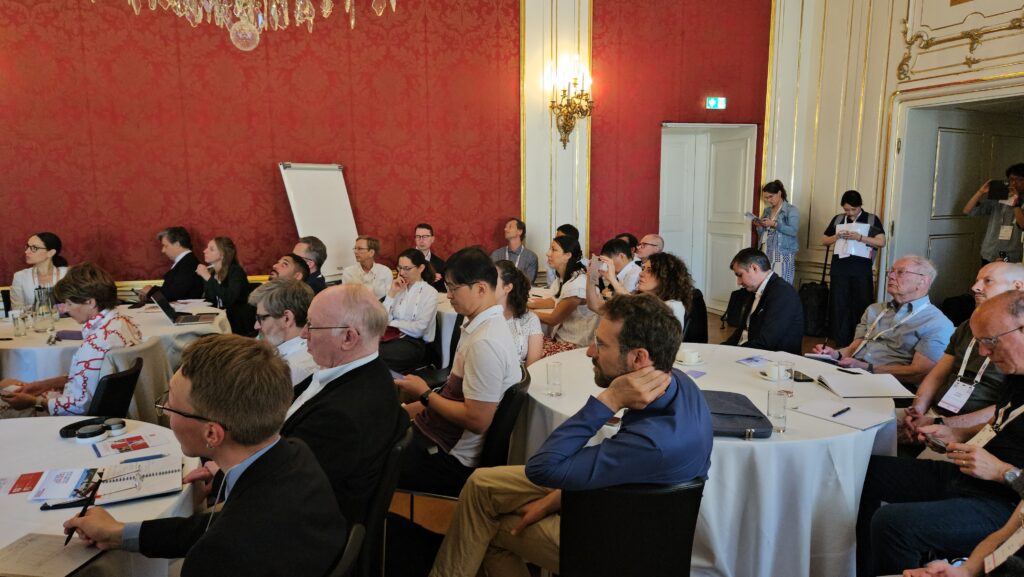
The workshop gathered a full room of participants from different parts of the heat pump value chain, including policy, research, industry and market actors. Through presentations, panel discussions and group dialogue, participants explored what is needed to move from ambition to implementation and to make heat pumps the default choice for clean, efficient and secure heating.
Heat pumps at the centre of the energy transition
Heat pumps are widely recognised as a cornerstone technology for the clean energy transition. They provide efficient heating and cooling, reduce dependence on fossil fuels, and can support flexibility in increasingly renewable electricity systems. Yet despite strong technical potential and growing policy attention, deployment remains uneven across countries and regions.
Opening the workshop, Axel Nordin Furdos from the International Energy Agency provided a global perspective on heat pump roll-out. His presentation highlighted positive growth trends around the world, while also pointing to significant differences between markets. One barrier discussed was the lack of common terminology: with many different terms used internationally, communication and comparison across countries can become more difficult.
Policy frameworks can unlock faster deployment
The policy dimension was a central theme of the workshop. Silvia Rezessy from DG ENER, European Commission, presented the European policy context, including the role of REPowerEU in reducing dependence on imported fossil fuels, accelerating the clean energy transition and diversifying energy sources. Participants also discussed policy and legislative measures that can support heat pump deployment, including renewable energy integration, the phase-out of fossil fuel boilers, energy efficiency requirements, ecodesign and energy labelling.
Richard Lowes from the Regulatory Assistance Project (RAP) built on this discussion by outlining key elements of an effective heat pump policy framework. He described a “policy temple” resting on three pillars: economic and market instruments, financial support, and regulation. The discussion underlined that price signals matter: lower electricity prices relative to fossil fuels can create stronger incentives for households and businesses to choose heat pumps.
At the same time, panelists stressed the importance of clear communication. Misinformation and uncertainty can slow adoption, even where policies and technologies are in place. Building trust, explaining the benefits accurately and addressing concerns openly are therefore essential parts of the deployment challenge.
Different markets, different barriers
A panel discussion brought together perspectives from Asia, North America and Europe, with representatives from public, private and independent organizations.
Panellist:
- Hengyi Zhao (China Heat Pump Alliance)
- Sophie Hosatte (Natural Resources Canada)
- Martin Forsén (NIBE, Sweden)
- Sylvia Rezessy (DG ENER, European Commission)
The panelists highlighted that there is no single pathway for heat pump deployment. Local climate conditions, electricity grids, policy frameworks, market maturity, installer capacity and consumer expectations all shape what is possible in each context.
The discussion also pointed to important regional differences. In China, for example, part of the market growth has been linked to cleaning the air in rural areas, replacing coal based heating by air-to-water heat pumps, while European discussions often focus on replacing fossil gas boilers in buildings and creating predictable policy signals. Across all regions, affordability and customer confidence were identified as decisive factors.
The long-term objective discussed by the panelists was clear: heat pumps should become such a natural choice that fossil fuel boilers are no longer considered the default option. Reaching that tipping point will require shared responsibility between policymakers, industry, utilities, researchers and installers.
Users, planning and installation challenges
The second part of the workshop shifted attention towards users, markets and practical implementation. Anja Floetenmeyer-Woltmann addressed customer perspectives, highlighting the importance of understanding how people make decisions about heating technologies and what kind of information they need to feel confident in their choices.
Christian Vering from RWTH Aachen discussed planning and installation challenges, pointing to the need for better processes, skills and tools to support high-quality installations. Presentations by Christoph Reichl from AIT and Michael Wernhart from TU Graz also addressed acoustic barriers and the possibilities of visualising sound, showing how research can help tackle specific concerns that may affect user acceptance.
From discussion to action
In the group discussions, participants explored how barriers can be overcome and where further research, collaboration and policy action are needed. Key themes included improving affordability, strengthening installer capacity, creating stable and supportive policy frameworks, addressing local grid and infrastructure constraints, and communicating more effectively with end-users.
The workshop confirmed that heat pump deployment is not only a technical challenge. It is also a question of markets, people, policies and trust. Accelerating deployment will require coordinated action across the value chain, adapted to local conditions but supported by international knowledge exchange.
By bringing together international expertise and encouraging open dialogue, the Heat Pump Centre workshop helped identify practical pathways for moving past barriers and turning heat pump potential into real-world progress. The discussions also underlined the value of continued collaboration within the IEA HPT TCP with partners across policy, research and industry.