


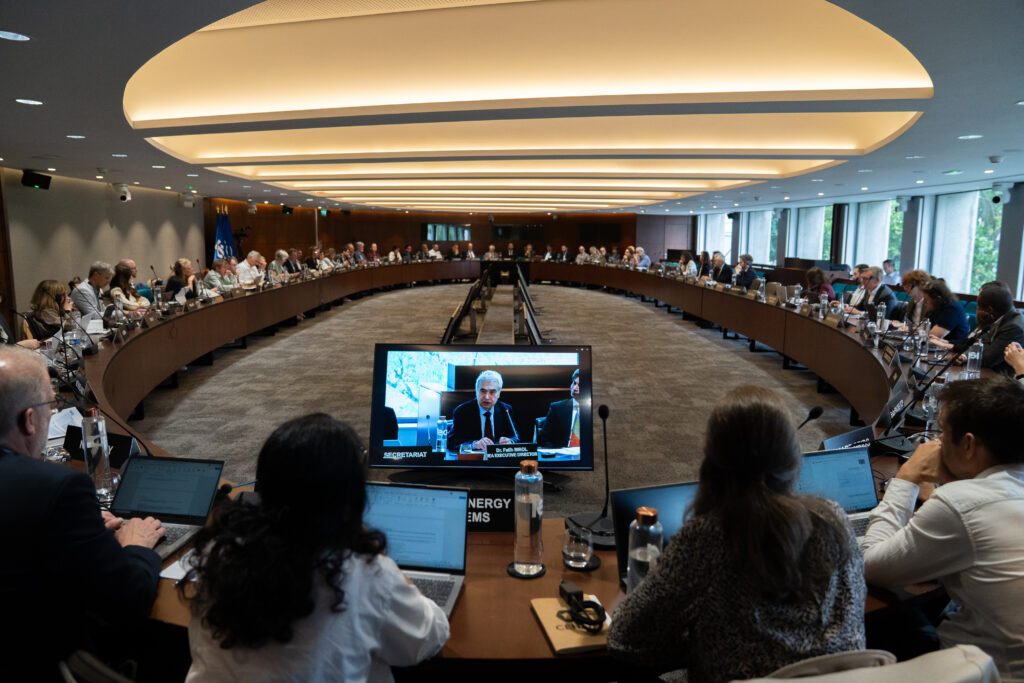
For 50 years, Technology Collaboration Programmes (TCPs) have played a crucial part in advancing international energy goals. The first energy shock in 1973 was one of the reasons behind the launch of the programme and today, the motivation behind this work is just as strong. In the beginning of June, representatives from all the 38 active TCPs met at the IEA headquarters in Paris to exchange experiences and discuss the future of the programme.
The IEA’s Technology Collaboration Programmes (TCPs) are unique international networks of independent groups that collaborate to advance the research, development and commercialisation of energy technologies – and to bring valuable knowledge to policymakers worldwide. In conjunction to the 50 year anniversary of the programme, IEA published a commentary describing the background of the programme and its high relevance in present days.
The publication described the important role of TCPs in making direct contribution to the work of the IEA, providing input to many of IEA’s flagship publications such as the Energy Technology Guide, State of Energy Innovation series and the Renewables market report. This helps to ensure IEA analysis represents a wide breadth of deep technical expertise.
Main Messages of IEA’s TCP Commentary
The commentary described that over the past five decades, some 80 TCPs have been created, and today there are 38 active groups covering nearly every aspect of the energy ecosystem – from renewables and smart grids to hydrogen, carbon capture, fossil energy and next-generation fuels. The Technology Collaboration on Heat Pumping Technologies (HPT TCP) is one of the active one. This TCP was established already in 1978 and has strongly contributed to that the technology is now well implemented on several markets while growing on others.
The TCPs currently involve thousands of experts from approximately 300 public and private organisations across around 60 countries, which also involves non-IEA-member countries. Since the launch of the TCPs in 1976, the possibilities for sharing information and connecting internationally have expanded. However, the role of the TCPs in promoting peer-to-peer exchange remains just as important.
Key Takeaways from the Universal TCP Meeting
On June 8-9 representatives of the TCPs convened at the IEA’s headquarters in Paris for the sixth Universal TCP Meeting. Participants discussed priorities for strengthening international collaboration on innovation and the role that innovation plays in supporting governments’ ambitions to achieve a secure, sustainable and affordable energy future. They exchanged ideas on how to best communicate impact from the work and how further promote and enhance the value of TCPs for the next 50 years and beyond.
The HPT TCP was represented by the Chair of the TCP, Stephan Renz, and the Manager of Heat Pump Centre, Caroline Haglund Stignor and contributed with an intervention about how the TCP work with a process for continuous self-evaluation of the work performed within the TCP as well as to the overall discussions during the meeting.
The Executive Director of IEA, Fatih Birol attended the meeting and made an intervention. He emphasized the importance and severeness of the ongoing energy crisis and stated that “spending R&D money on energy technology is as important for the national security as buying missiles”. A very inspiring talk!!
One of the key takeaways from the discussions during the meeting was the TCPs unique role in creating a meeting place and dialogue platform for different types of stakeholders – academia, industry, market, policy and investors. The TCPs are supporting international collaboration between researchers, but they serve also as a direct bridge to the policy community.

Drivers for Energy Innovation
According to IEA’s commentary, there are multiple drivers of energy innovation. In a recent IEA survey of experts and practitioners conducted for the State of Energy Innovation 2026 report, energy security emerged as the leading driver of innovation, ahead of affordability, emissions reduction and supporting national economic performance.
Source