

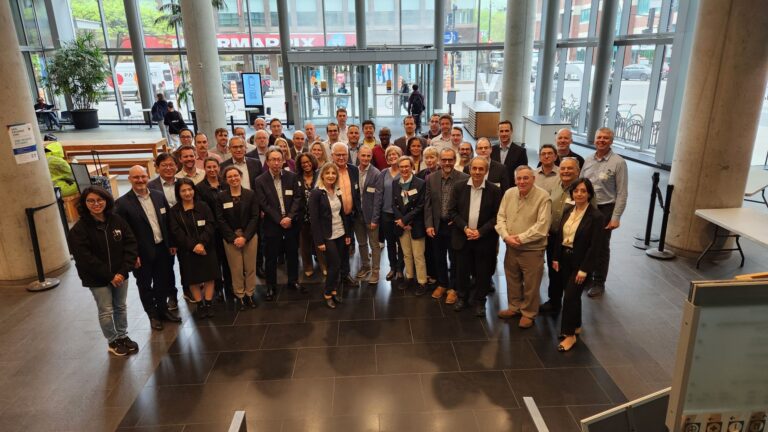
Once again, the crucial role that heat pumps play in decarbonizing the energy system and strengthening resilience in Canada is reiterated! This past May the Canadian representatives in HPT TCP organized an insightful workshop on “Canadian perspectives on Heat Pumping Technologies”. In the framework of the HPT TCP Spring ExCo meeting, delegates and project managers from all over the world got together with representatives from the heat pump sector in Canada to learn about about the heat pump related initiatives in Canada.

Some of the most important points covered during the conference were the policy drivers supporting an increased deployment heat pumps in Canada such as affordability, energy security, emission reductions and access to cooling. However, the market uptake of this technology is also facing some challenges, related to very cold climates in some regions of the country during parts of the year, insufficient capacity of the electricity grid in some locations, high electricity to gas price ratio, lack of skilled workers, just to mention a few. To stimulate energy efficiency and the deployment of heat pumps in Canada, targeted incentives programs are available.
Moreover, heat pump adoption as usual can be a burden to the grid in Canada, and therefore smart solutions are needed. Grid-friendly adoption of heat pumps can on the other hand support the grid and increase decarbonization potential.
Another highlight includes the presentation by the Canadian HPT delegate Sophie Hosatte – Ducassy Hosatte who gave and overview of the Buildings Program at CanmetENERGY in Varennes and was accompanied by very many interesting presenters in the program. There were also presentations about CO2 based heat distribution systems in buildings, solar and dual source heat pumps, standing column wells, large capacity CO2 heat pumps with demand response feature, heat pump deployment in mobile defence camps to reduce diesel consumption and much, much more. In addition, the TCP Chair Stephan Renz together with project manager Veronika Wilk, presented the activities within HPT TCP for the Canadian participants.
The event was organized by Josef Ayoub, Sophie Hosatte, Natural Resources Canada together with Concordia University
The full agenda, including links to all the presentations, are available below.
WORKSHOP AGENDA
Welcoming Remarks
- Drew Leyburne, Assistant Deputy Minister, Energy Efficiency and Technology Sector, NRCan
- Karim Zaghib, CEO Volt-Age, Canada First Research Excellence Fund, Concordia University
- Andreas Athienitis, Director CZEBS & Scientific Chair, Volt-Age, Concordia University
- Stephan Renz, Chairman of HPT TCP, Beratung Renz Consulting, Switzerland
- Jamie Hulan, Senior Director, Equipment and Housing Division, Office of Energy Efficiency, EETS, NRCan
- Philippe St-Jean, Deputy Director, NRCan – EETS – Office of Energy R&D
- Eloise Edom, Institut de l’énergie Trottier, Polytechnique Montréal
- Aziz Mbaye, John Gaspo, Laboratoire de technologies de l’énergie, Hydro-Québec
- Bruno Gauthier, Engineer, Energir
- Dr. Sophie Hosatte, Director, Buildings Group, CanmetENERGY, EETS, NRCan
- Andreas Athienitis, Director, Centre for Zero Energy Building Studies, Concordia University
- Philippe Pasquier, Professor Polytechnique Montréal
- Sébastien Poncet, Sherbrooke University
- Dominique Monney, Copeland
- Martin Kegel & Justin Tamasauskas, CanmetENERGY in Varennes, EETS, NRCan
Want to learn more about the ExCo meeting? We recommend you to read Towards Clean, Affordable, Resilient Heating & Cooling: ExCo-meeting Spring 2025.