


During the four-day HPT TCP ExCo meeting in Freiburg on November 10-13, a lot of information was exchanged, and participants discussed research needs, as well as barriers and opportunities related to energy security, energy efficiency, and the decarbonization of the energy system through the innovation and deployment of heat pumping technologies.
During the meetings, Executive Committee delegates from the 20 member countries met with HPT Project Managers, invited guests, and German researchers and industry representatives active within the sector to receive updates on the ongoing HPT Projects, discuss topics for new projects, and collaborate with other organizations.
New HPT Projects
The ExCo discussed new activities within the HPT TCP. A new HPT Project titled “Enhanced of Miniaturized Components” is just about to start, and several countries have already confirmed their participation. Other proposals and ideas for future projects within HPT TCP, including comfort cooling, energy system flexibility, heat pumps in multifamily buildings, and the integration of heat pumps to improve the efficiency of hydrogen and carbon capture processes, were also presented and discussed during the meeting.

Collaboration with other organizations
Invited guest from the International Institute of Refrigeration (IIR), DG ENER at the European Commission (EC), and the European Heat Pump Association (EHPA) gave insightful presentations of their activities and views on the needs for future research and other measures. These organizations share several overarching goals and visions with HPT TCP, which is why strengthened collaboration could be a win-win for all.

The meeting was also attended by the HPT TCPs desk officer at the IEA bureau, who provided an update on how heat pumps will be included in future IEA flagship reports, such as the World Energy Outlook, Energy Technology Perspectives, and State of Innovation Report. He also mentioned the work to develop a common international taxonomy for heat pumps, which is of high importance to enable policymakers to design efficient policies and monitor their impact.
A German representative from IEA CERT (Committee on Energy Research and Technology) presented the IEA structure and highlighted the shared goals of IEA and its member states.
Upcoming 15th IEA Heat Pump Conference in Vienna 2026
Other important issues addressed during the meeting days related to preparations for the upcoming flagship activity of the TCP – the 15th IEA Heat Pump Conference 2026 (hpc2026.org). Registration is open, and the review of submitted papers is ongoing, along with planning the overall program, including policy forums, workshops, and site visits.
National workshop
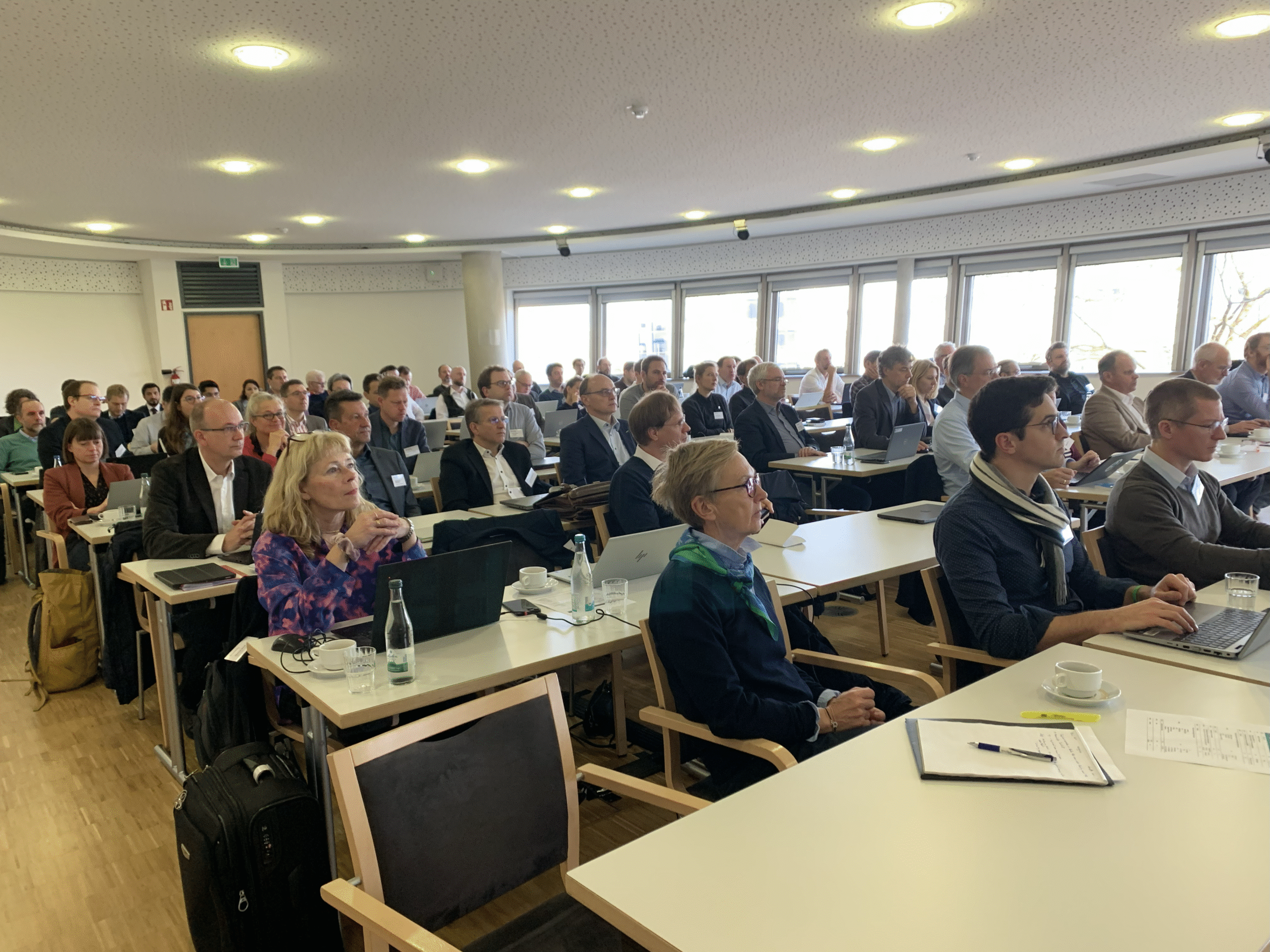
The National workshop on heat pumping technologies, organized by the German hosts, brought together leading researchers, industry representatives, and policymakers to discuss the current state and future direction of heat pump technology. The event opened with a welcome from Dr. Miara and an overview of Fraunhofer’s work in renewable energy. Key sessions included an update on the IEA HPT TCP by the TCP Chairman Stepan Renz, who provided information about the IEA as well as ongoing and future HPT projects, together with some of the HPT Project Managers. Some of the highlighted projects addressed advancements in heat pumps for drying, heat pumps in multifamily buildings, positive energy districts, and the integration of flammable refrigerants.
A significant focus was placed on Germany’s energy transition, with Mr. Linsmayer detailing funding schemes and research initiatives supporting the deployment of heat pumps. The market status, presented by Mr. Schreinermacher of BWP, highlighted a structural shift: while the overall heating market has contracted, heat pumps are gaining market share, driven by policy changes and increased government support (see Figure 1 below).

Research institutions like RWTH Aachen, ILK Dresden, TU Dresden, DLR, and several Fraunhofer institutes showcased innovations in component design, digital twins, high-temperature heat pumps, and safety for flammable refrigerants. Industry leaders from the sector (Vaillant, Stiebel Eltron, AIT, EBM Papst, SKF, Bitzer, AGO-Energie, Johnson Controls, Siemens) presented results from innovation projects, new products, and case studies, emphasising efficiency, sustainability, and integration into district heating and industrial processes.
The workshop concluded with a call for continued collaboration and knowledge exchange to accelerate the adoption of heat pumps as a cornerstone of Germany’s decarbonisation strategy. Indeed, a very inspiring event!
Site visits in heat pump laboratories
The participants visited two leading research facilities at Fraunhofer ISE. One of them focuses on performance testing and development of heat pumps, including key mark certification and component innovation such as compressors, heat exchangers, and refrigerant circuits. The lab supports industrial partners in enhancing performance and reducing costs, utilising climate chambers for rigorous testing. Special emphasis is placed on natural refrigerants, with the capability to handle flammable or toxic substances, and on reducing refrigerant charge in circuits. The lab also conducts high-temperature heat pump optimisation, acoustics and vibration measurements, and operates under an ATEX-compliant safety concept.
The other one, the outdoor refrigerant safety labis dedicated to the safety of hydrocarbons as refrigerants. It investigates the real-world release behaviour of propane in both outdoor and indoor scenarios, developing safer components and concepts to minimise hazard potential. The lab performs leakage and dispersion studies, evaluates gas separators, and simulates leakages for certification processes according to international standards. Facilities include setups for propane release tests, temperature conditioning, and gravimetric determination of releasable charge. The lab is ATEX-compliant and can safely handle releases of up to 3 kg of propane, contributing to increased device safety and robust certification procedures.