

Clean Heat Behaviour Mapping project by Zero Waste Scotland
Rethinking clean heat through a circular economy lens: insights from Zero Waste Scotland
65As part of the IEA HPT Project 65 deep-dive series, Zero Waste Scotland presented recent research on how circular economy principles can support Scotland’s clean heat transition [Zero Waste Scotland].
The session highlighted that circularity cannot be addressed through product design alone but must be understood as a system-wide challenge shaped by how clean heat systems are specified, installed, maintained, repaired, recovered, reused, refurbished, and recycled. Based on a rapid evidence review, stakeholder interviews, and a workshop process, the research shows that circular practices already exist in parts of the sector, including repair and maintenance, durable design, recovery of metals and refrigerants, selected component refurbishment, and emerging take-back or service-based ownership models. However, these practices are not yet consistently embedded across the heat value chain.
Behavioral systems mapping
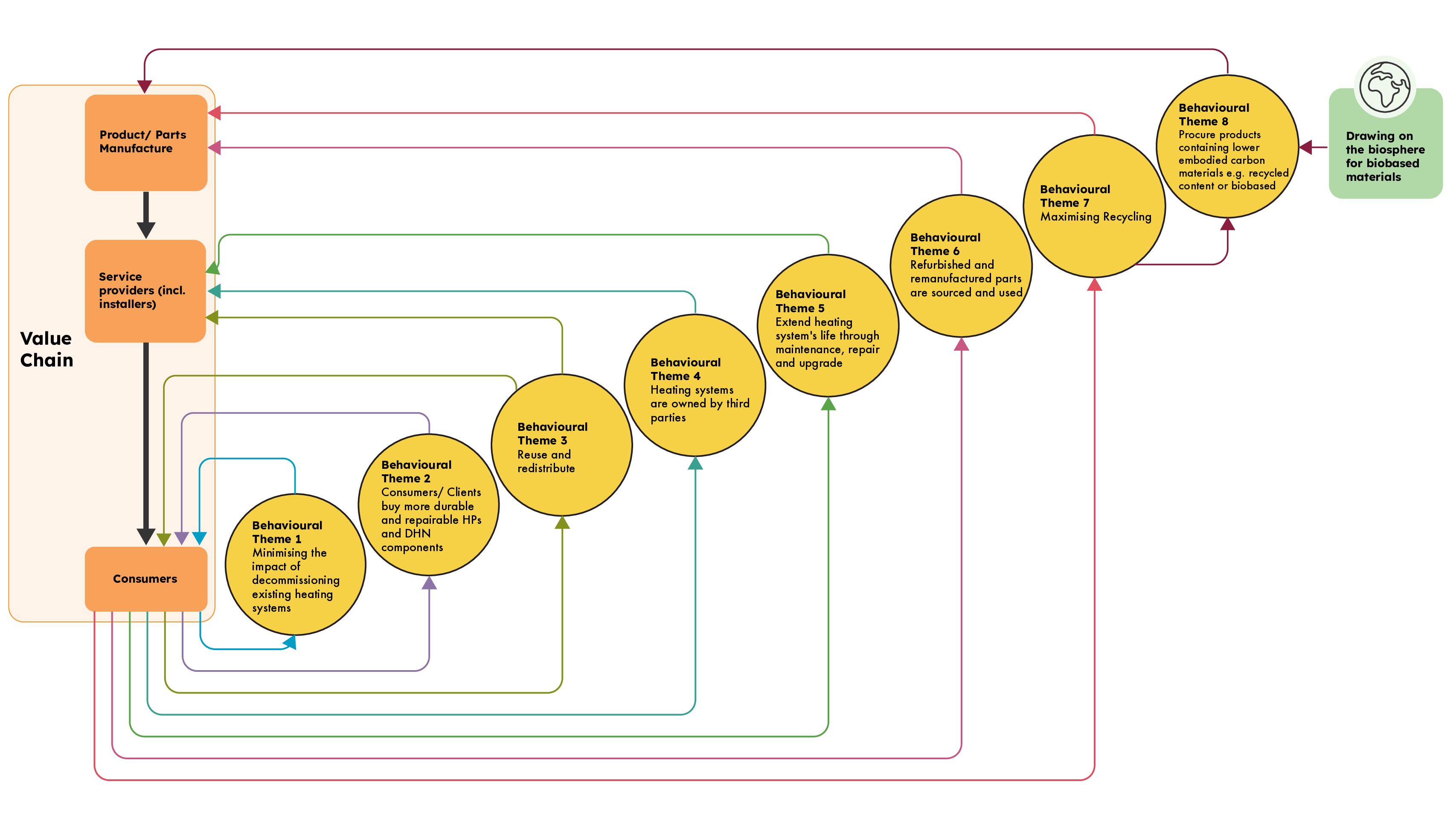
A central output of the work was the development of eight behavioural themes and related systems maps, showing how circular outcomes depend on the interaction between stakeholders, infrastructure, market conditions, skills, regulation, and feedback loops.
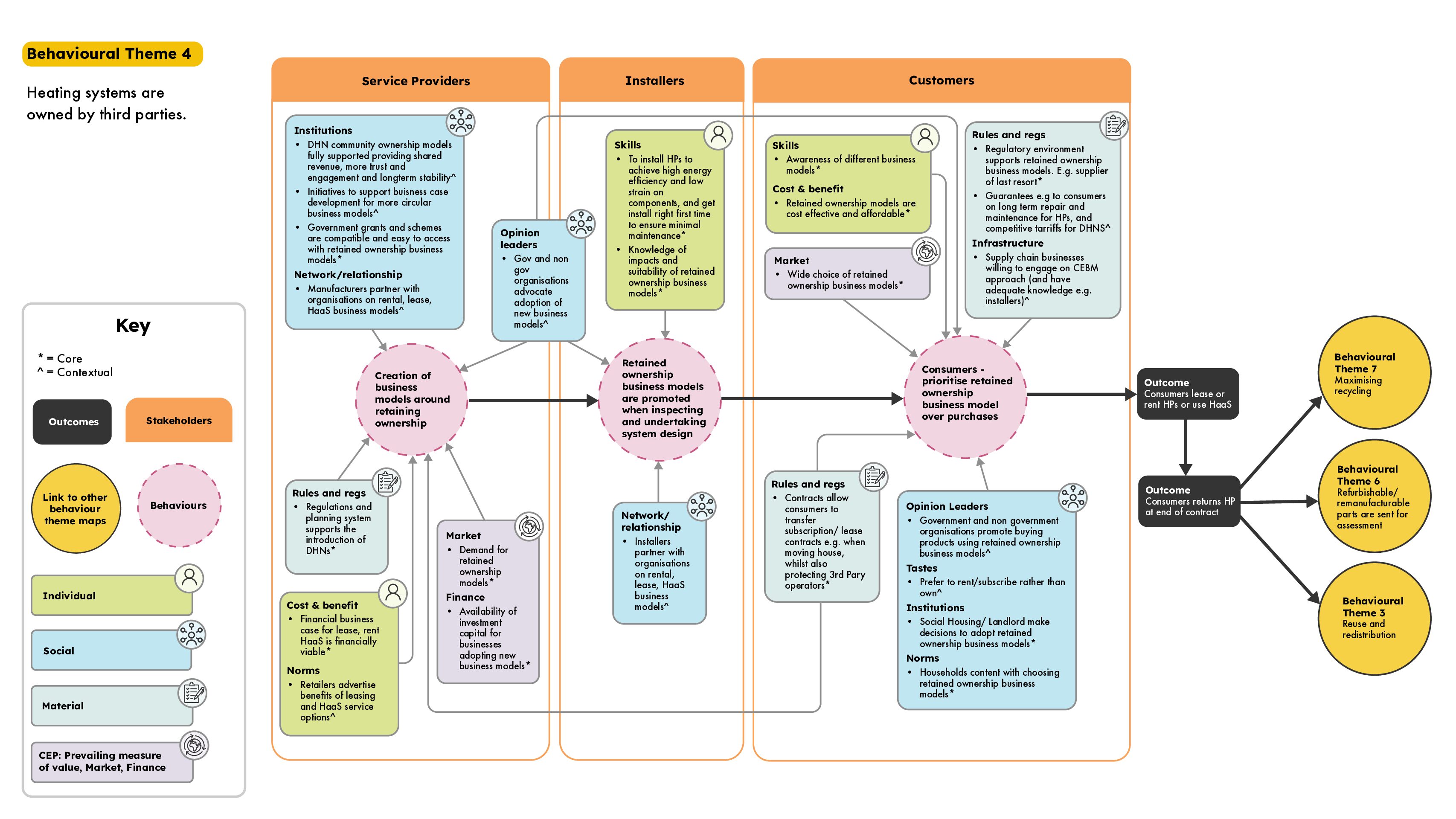
One example is Behavioural Theme 4: Third-Party Ownership models, which explores how leasing, subscription, and heat-as-a-service models could support circular outcomes. By linking ownership with maintenance, performance, and end-of-life responsibility, these models may create stronger incentives to extend product lifetimes, recover components, and enable reuse, refurbishment, or recycling. Their uptake, however, depends on financial viability, customer trust, installer knowledge, clear regulation, and long-term service relationships.
Barriers and Opportunities
The study also identifies key barriers, including weak waste data, skills gaps, limited refurbishment and take-back infrastructure, fragmented logistics, unclear standards for reused components, uncertain business models, and low confidence in second-life parts. At the same time, it points to opportunities such as repairable and durable design, retention of existing components, stronger refurbishment systems, installer training, circular procurement, and service-based models.
For Project 65, the session reinforced that circularity in heat pumps requires a whole-system perspective. Moving from isolated examples to normal practice will depend on stronger collaboration across manufacturers, installers, service providers, consumers, waste operators, policy makers, and sector bodies. Below, you can view the full presentation shared during the deep-dive session on the 2nd of June 2026 by Anastasios Markopoulos (Zero Waste Scotland).