

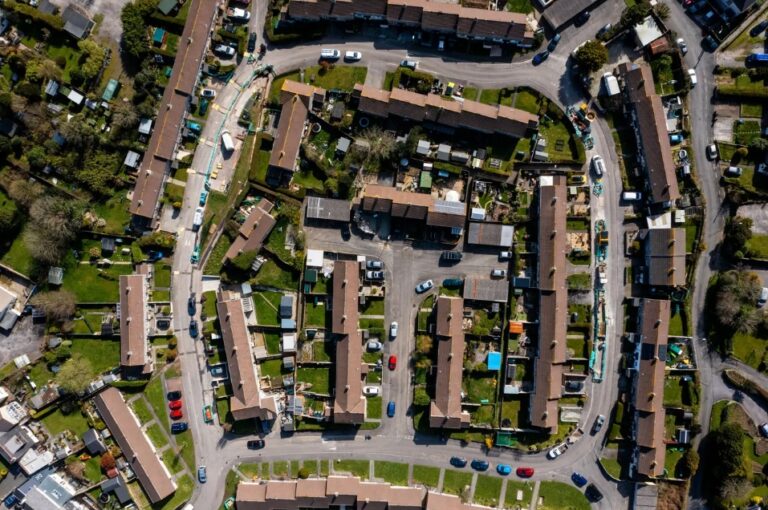
In Cornwall, the southest tip of the United Kingdom, a new project showcases a twenty-first century modern heating vision with networked heat pumps. The Heat the Streets initiative has provided practical evidence that networked ground source heat pumps offer a viable and scalable alternative to the UK’s traditional gas infrastructure.
Implemented over a two-year period, the project deployed ground source heat pump technology in 96 properties—both new-build and existing homes, across private and social housing sectors in Cornwall. These systems were integrated into shared ground arrays, a communal underground network of boreholes and pipework designed to extract consistent heat from the ground. Once in place, the boreholes remain hidden from view and deliver a stable, year-round heat supply to connected homes.
The Heat the Streets pilot project has shown that ground source heat pumps can be successfully retrofitted to domestic properties at scale without the need for a ‘fabric first’ approach. The initiative further demonstrated that this can be achieved with no upfront cost to the customer, offering a practical and accessible route to low-carbon heating for existing homes. The project adressed:
- Fuel poverty
- Thermal comfort
- Carbon dioxide emissions reduction
Technical details
Kensa was responsible for the design, supply, and installation of the ground source heat pump systems used in the Heat the Streets project. The project introduced a distinctive approach by using shared ground loop arrays (SGLAs), which connect to individual ground source heat pumps in each home. These arrays act as a low-temperature energy network, circulating ambient ground heat through underground pipework. Each heat pump then upgrades the heat locally to deliver space heating and hot water on demand. Operating at ground temperatures between -5°C and 20°C, this setup delivers high efficiency, reduces heat loss, and avoids the overheating issues often seen with centralised plant systems.
Financing model
A key feature of Heat the Streets is its financing model, which enables the deployment of ground source heat pump infrastructure without upfront cost to homeowners. The shared ground loop arrays are owned and maintained by Kensa Utilities, and households simply pay a fixed annual connection fee—£250 for new builds—comparable to a gas standing charge.
This approach treats underground heat infrastructure as a long-term utility asset, attracting private investment to fund large-scale, area-based decarbonisation. By separating infrastructure ownership from the customer, the model lowers financial barriers to adoption and supports widespread transition to low-carbon heating. The project was partly supported by the European Regional Development Fund (ERDF).
Societal transition
How did this project get the residents on board? As part of the Heat the Streets project, the team carried out local engagement through information sessions and recruitment campaigns. This helped identify suitable areas within the village for installing ground source heat pump infrastructure. Based on practical factors and cost considerations, contractors developed a shortlist of properties to possibly transition, and a dedicated design team was formed to support the process.
The Heat the Streets initiative was open to all village residents and was subject to property feasibility surveys. When the project was promoted to private homeowners, it was five times oversubscribed, showing the appetite for such schemes.
This project has been executed and brought to you by Kensa
This project is shared with you within the frame of the IEA HPT Project 62, fostering international collaboration on Heat Pumps for Multi‑Family Residential Buildings in Cities.