

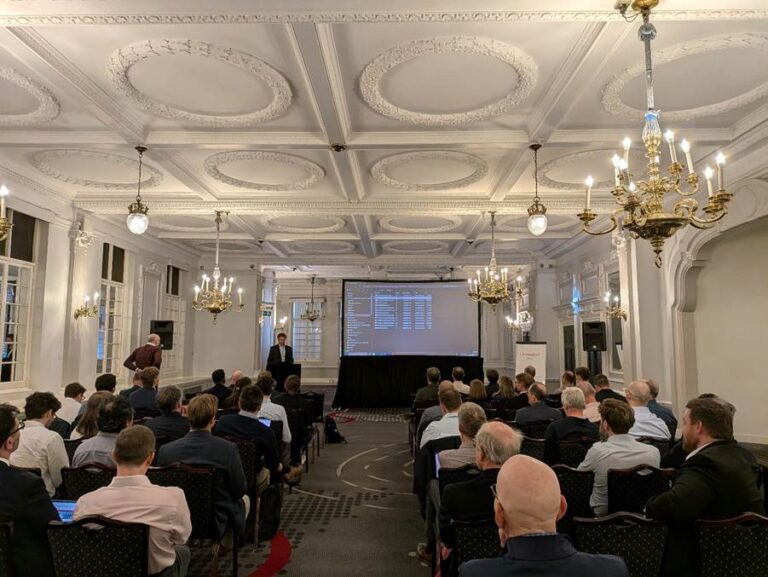
A full-day research symposium brought together researchers, industry practitioners, and policymakers to share the latest evidence on heat pump technology, deployment challenges, and the UK’s transition to low-carbon heating. What emerged was a picture of a sector generating sophisticated knowledge, yet confronting a persistent gap between technical capability and deployment at scale.
The symposium was jointly hosted by the UK Department for Energy Security and Net Zero (DESNZ) and the IEA Heat Pump Technology Collaboration Programme (HPT TCP).
The symposium opened with an overview of the IEA HPT TCP’s current project portfolio, spanning four strategic themes: system integration, extending operational range, robust value chains, and refrigerants and new technologies. Among the projects highlighted were Project 57 on heat pump flexibility in multi-vector energy systems, Project 70 (its planned follow-on), and Project 58 on high-temperature heat pumps for industrial applications, reflecting the programme’s growing focus on harder-to-abate heating contexts.
Noise thresholds of air source heat pumps
A significant portion of the morning session addressed noise from air source heat pumps (ASHPs), a barrier whose scale is often underestimated. Field evidence and the IEA HPT Project 63 project’s research together painted a detailed picture of both the problem and the path forward. Roughly 25% of proposed ASHP sites fail the MCS 020a noise assessment, and of those failures, approximately a quarter fall short by just 1 dB, a margin well within the uncertainty of the current assessment methodology. Psychoacoustic testing across 271 participants at 10 institutions in 6 countries confirmed that loudness is by far the dominant driver of annoyance, with a statistical model achieving 97.7% explained variance. Crucially, higher background noise levels were found to mask ASHP emissions and reduce annoyance up to around 40 dB(A), beyond which masking benefits disappear. This threshold effect has direct policy relevance: assessments in noisier urban environments may be applying unnecessary stringency, while quiet rural sites genuinely warrant more careful treatment. Complementary analysis of time-varying noise emission levels, which showed a range of more than 15 dB across available products, reinforced that unit selection alone can often resolve marginal failures, and pointed toward the case for updating MCS 020a with a more graduated, context-sensitive framework.
Heat pumps in the non-domestic sector
The afternoon shifted focus to real-world deployment experience in the non-domestic sector, which accounts for roughly a third of all UK building heating energy. Project 60 has developed an interactive web-based guidance tool to support first-time buyers of commercial heat pump retrofits, drawing on more than 50 case studies to help building owners identify feasible systems and common information gaps before engaging installers. Operational experience from Priory Academies, an education trust managing 65 buildings across 13 sites, including four swimming pools, illustrated the systemic friction of commercial retrofit: DNO applications must typically be submitted around 65 days before installation, making early grid engagement a critical path item, not an afterthought. Water quality in existing systems must be assessed before connecting new equipment, as poor water quality without hydraulic separation risks both circulation problems and warranty invalidation. Perhaps most striking was a live financial model for a Scottish school replacing 900 kW of gas boilers with ASHPs: while carbon savings would reach 453 tonnes per year, annual energy costs would increase by £82,003, underscoring how the electricity–gas price gap continues to make carbon-positive decisions financially negative at the building level. The proposed solution, integrating on-site solar generation via a Power Purchase Agreement, points toward the bundled finance and technology models increasingly needed to unlock commercial deployment.
Ground-source heat pump monitoring
Two sessions addressed ground-source heat pump monitoring, contributing field data rarely available at this instrumentation density. At the BGS headquarters in Keyworth, a 300 kW GSHP array comprising 28 boreholes drilled to 225 m has been retrofitted to two mixed-age buildings, saving an estimated 40 tonnes of CO₂ in its first partial winter and extracting 90 MWh of heat. Early COP data ranged from 3.0 to 4.0 across the two served buildings, against a design target of 3.7, with commissioning adjustments still underway. At the UKGEOS research sites in Cheshire and Glasgow, work on aquifer thermal energy storage (ATES) highlighted a striking discrepancy: in-situ thermal response testing of the Sherwood Sandstone measured a conductivity of 3.4 W/mK, 133% above the MCS default design value of 2.4 W/mK. If installers routinely apply conservative defaults rather than site-specific measurements, they are systematically oversizing borehole arrays and inflating project costs. Taken together, both monitoring programmes strengthened the evidence base for subsurface geothermal resources as a substantially under-exploited asset: fewer than 20 ATES schemes exist in the UK, despite nearly 3,000 operating globally and approximately 33% of UK land area being geologically suitable.
Emerging heat pumping technologies
The session on emerging technologies addressed a practical question: for the segments of the housing stock, particularly flats and constrained urban dwellings, where standard ASHP deployment faces noise, space, and planning constraints, what alternatives exist? Thermoacoustic heat pumps, which move heat using sound waves in a non-flammable helium medium, offer silent operation, zero GWP, and a working range of −20°C to +80°C, suited to existing radiator temperatures without system upgrades. Estimates suggest the reduction in upfront installation costs compared to a conventional 55°C heat pump retrofit (including necessary radiator upgrades) could reach EUR 17,000–38,000 per home. Solid-state heat pumps, using thermoelectric effects rather than a refrigerant cycle, offer a similarly compact, low-noise architecture for constrained settings. Neither technology is positioned to replace compressor-based systems in the mainstream, but both expand what is practically deployable in the hardest-to-decarbonise dwellings. Alongside these, research from the University of Liverpool demonstrated a flexible heat pump cycle that integrates thermal energy storage within a standard single-compressor system to recover subcooling heat that is otherwise wasted, with theoretical COP improvement of up to 20% compared to a single-stage baseline, and the additional benefit of waste-heat-driven defrosting that could save 5–17% energy in the UK’s humid winters.
Strategic grid planning
The symposium closed with a session on strategic grid planning, the infrastructure dimension that will ultimately determine whether heat pump deployment can reach national scale. The National Energy System Operator (NESO)’s Regional Energy Strategic Planning (RESP) programme is developing Consistent Planning Assumptions (CPAs) to translate national heat pump uptake projections into localised network impact estimates for Distribution Network Operators. A transitional RESP published in January 2026 introduced heat pump CPAs that account for spatial variation in temperatures across DNO license areas, seasonal demand profiles, dwelling categories, and consumer behaviour patterns drawn from real trial data. Full Regional Energy Strategic Plans covering all 11 GB regions are due by end-2028, with DNO business plans for the 2028–2033 price control period requiring inputs this year, making the development of consistent, evidence-based planning assumptions a near-term priority, not a long-horizon aspiration.
Non-technical barriers to heat pump deployment
Across all sessions, a consistent theme emerged: the barriers to heat pump deployment are not primarily technical. The evidence base is deepening, the technology is diversifying, and field performance data is accumulating. What lags behind is the system of incentives, standards, planning rules, grid planning, and financing instruments needed to make deployment viable for building owners without specialist knowledge or institutional procurement capacity. The IEA HPT TCP continues to support this work through its international network of collaborative projects.
For more information on IEA HPT TCP projects referenced in this symposium, visit heatpumpingtechnologies.org.
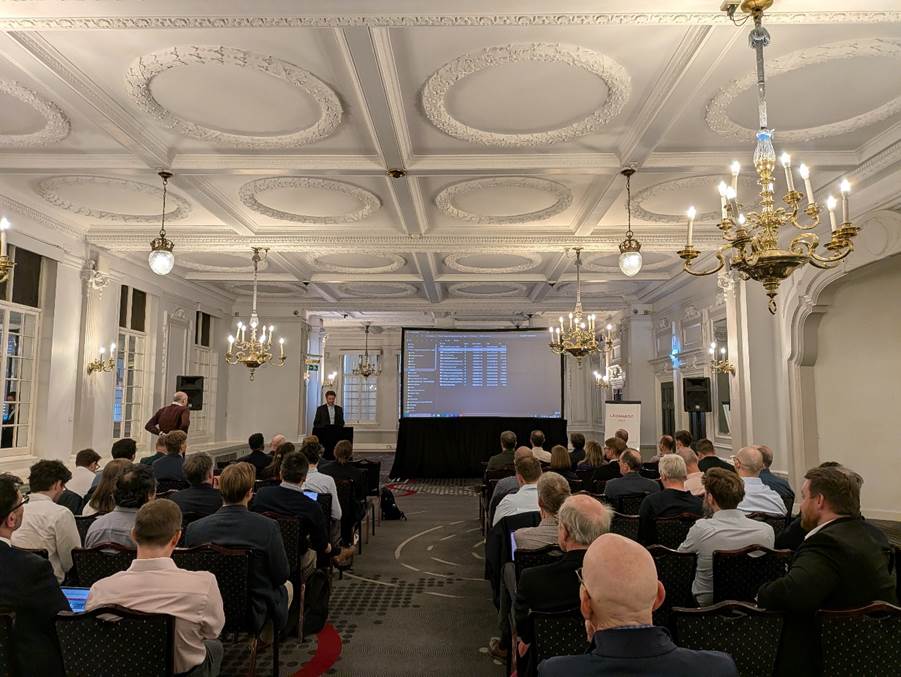
Photo courtesy of Oliver Sutton of DESNZ